
The most effective chronic pain management strategy is not about choosing between conventional and holistic medicine, but about intelligently combining them based on their physiological mechanisms.
- Holistic practices like acupuncture, diet, and specific supplements work by directly influencing the body’s neuro-inflammatory and hormonal systems.
- Successful integration requires medical supervision to leverage synergies (like probiotics with antidepressants) and avoid dangerous interactions (like St. John’s Wort with SSRIs).
Recommendation: Move beyond simply treating symptoms by building an evidence-based, systemic plan with your healthcare provider that addresses the root biochemical causes of your pain.
Living with chronic back pain often feels like a frustrating cycle of managing symptoms, with a heavy reliance on painkillers that can bring their own set of complications. Many seek alternatives, exploring a world of holistic practices. The conventional advice is often a vague suggestion to “try yoga” or “eat healthier,” leaving patients to navigate a complex and often contradictory landscape of information on their own. This approach misses the fundamental point: these are not mutually exclusive paths.
The true power lies not in replacing one with the other, but in creating a sophisticated synergy. But what if the key to unlocking this synergy wasn’t just about adding more therapies, but about understanding the specific, evidence-based *physiological mechanisms* through which they work? Shifting the focus from simply what a therapy is, to *how* it influences your body’s chemistry—from your nervous system and inflammatory markers to your gut health and hormones—is the cornerstone of a truly effective, integrated pain management strategy.
This guide moves beyond the surface-level platitudes. We will dissect the science behind why certain holistic practices are effective, how they interact with conventional treatments, and which common mistakes can sabotage your healing. By understanding these principles, you can work with your healthcare provider to build a personalized, powerful, and sustainable approach to reclaiming your life from chronic pain.
For those who prefer a visual format, the following video offers an excellent primer on the brain’s crucial role in perceiving and processing pain signals, a foundational concept for understanding how many of these integrated therapies work.
To navigate this integrated approach effectively, this article is structured to explore the specific mechanisms and practical applications of combining different modalities. The following sections delve into the science, the synergies, and the critical safety considerations for building your comprehensive pain relief strategy.
Summary: An Evidence-Based Guide to Integrative Pain Management
- Why Acupuncture Works for Pain Even if You Don’t Believe in Qi?
- How Probiotics Can Support Your Antidepressant Treatment?
- St. John’s Wort vs SSRIs: The Dangerous Interaction You Must Avoid
- The Anti-Inflammatory Diet Mistake That Sabotages Your Healing
- When to Take Magnesium to Maximize Sleep Benefits?
- Why Incorporating Plants in Your Office Boosts Focus by 15%?
- The Jawline Acne Sign That Indicates a Hormonal Imbalance
- Why Functional Strength Training Is More Important Than Cardio for People Over 40?
Why Acupuncture Works for Pain Even if You Don’t Believe in Qi?
For many, acupuncture is shrouded in the mysticism of “Qi” and energy flows. However, its effectiveness for chronic pain, particularly back pain, is rooted in concrete neurophysiology, not belief. When a needle is inserted, it creates a micro-trauma that stimulates nerve fibers. This signal travels to the spinal cord, where it can activate the “gate control” mechanism, effectively closing the gate on slower, chronic pain signals. But the effect goes much deeper, triggering the release of the body’s own painkillers—endorphins and enkephalins—in the brain, which provides systemic relief.
Modern research is now validating these effects at a biochemical level. The stimulation from acupuncture isn’t just a neurological trick; it has a measurable anti-inflammatory effect. For a patient with chronic back pain, this is crucial, as underlying inflammation is a key driver of persistent discomfort. A recent systematic review confirms this, showing a significant reduction in key inflammatory agents in the body following treatment.

This image illustrates the precise, clinical nature of the intervention. A 2024 systematic review found that acupuncture leads to a decreased TNF-α, IL-1, IL-6, and CRP after treatment, all of which are pro-inflammatory cytokines that perpetuate the pain cycle. Therefore, acupuncture works as an integrated therapy by targeting both the nerve signaling of pain and the underlying biochemical inflammation, offering a two-pronged attack that medication alone may not achieve.
How Probiotics Can Support Your Antidepressant Treatment?
The link between your gut and your brain, known as the gut-brain axis, is a critical and often-overlooked component of managing chronic pain. This connection is particularly relevant when antidepressants, such as SSRIs, are part of a pain management plan. While these medications work by increasing serotonin levels in the brain, it’s a little-known fact that up to 95% of the body’s serotonin is produced in the gut by specialized cells and influenced by your microbiome.
Chronic pain and stress can lead to gut dysbiosis—an imbalance of good and bad bacteria. This imbalance can impair serotonin production and increase systemic inflammation, a primary driver of chronic pain. An inflamed gut can become “leaky,” allowing inflammatory molecules to enter the bloodstream and contribute to a state of low-grade, body-wide inflammation that can lower your pain threshold and worsen mood, effectively working against your medication.
This is where probiotics come in. By introducing beneficial bacteria, you can help restore a healthy gut environment. A balanced microbiome supports efficient serotonin production and helps to fortify the gut lining, reducing systemic inflammation. In this context, probiotics don’t replace antidepressants; they create a more favorable biochemical environment for them to work effectively. They act as a foundational support system, addressing the inflammatory and neurochemical disruptions originating in the gut, thereby enhancing the overall efficacy of a conventional pain and mood management strategy.
St. John’s Wort vs SSRIs: The Dangerous Interaction You Must Avoid
While the goal is to integrate holistic and conventional care, it must be done with medical expertise, as some combinations are not synergistic but dangerous. St. John’s Wort is a well-known herbal remedy for mild to moderate depression, and its mechanism of action is surprisingly similar to that of many prescription antidepressants. It contains active compounds, like hyperforin and hypericin, that are believed to inhibit the reuptake of neurotransmitters, including serotonin, in the brain.
This similarity is precisely what creates a significant risk. When St. John’s Wort is taken concurrently with a Selective Serotonin Reuptake Inhibitor (SSRI) or other related antidepressants (SNRIs, MAOIs), the combined effect can lead to a dangerous buildup of serotonin in the brain. This condition, known as serotonin syndrome, can range from mild (shivering, diarrhea) to severe and life-threatening (high fever, seizures, muscle rigidity). The danger is not theoretical; research from major clinical reviews shows the risk of serotonin syndrome increases by 600% when St. John’s Wort is combined with SSRIs.
Because it is an over-the-counter supplement, many patients mistakenly assume St. John’s Wort is harmless. This highlights the absolute necessity of full transparency with your healthcare provider about all supplements you are taking. An integrative approach is not a “do-it-yourself” project. Before considering this herb, a thorough risk assessment is mandatory.
Your Risk Assessment Checklist for St. John’s Wort
- Current Medications: Are you currently taking any SSRIs, SNRIs, or MAOIs? If yes, St. John’s Wort is strongly contraindicated due to severe interaction risks.
- Drug Half-Life: What is the half-life of your current antidepressant? This determines the necessary “washout period” before you can safely start the herb.
- Other Interactions: Are you taking blood thinners, birth control, or anticonvulsants? St. John’s Wort can interfere with the metabolism of these and many other drugs, reducing their effectiveness.
- Supplement Standardization: Is your supplement standardized for its active compounds, typically hypericin (0.3%) or hyperforin (3-5%)? Unstandardized products have unreliable potency.
- Medical Supervision: Have you discussed a supervised tapering schedule with your prescriber? Never stop an antidepressant abruptly to switch to an herbal remedy.
The Anti-Inflammatory Diet Mistake That Sabotages Your Healing
Adopting an “anti-inflammatory diet” is one of the most common recommendations for chronic pain. While the principle is sound—reducing foods that promote inflammation and increasing those that fight it—the execution is often flawed. The most significant mistake is not a single food choice, but a mindset: extreme restriction and hyper-focus that leads to nutritional imbalances and psychological stress, paradoxically increasing inflammation.
Case Study: Orthorexia and Increased Inflammation
A 2024 observational study highlighted this danger. It followed patients who, in their quest to follow a strict anti-inflammatory diet, developed orthorexia nervosa—an unhealthy obsession with “pure” eating. These individuals showed elevated levels of the stress hormone cortisol and increased inflammatory markers like CRP and IL-6. The psychological stress of the restrictive diet completely negated and even reversed the intended anti-inflammatory benefits of their food choices.
This illustrates that a successful anti-inflammatory strategy is about balance and inclusion, not just elimination. Many well-intentioned dieters make specific biochemical mistakes that prevent them from seeing results. Focusing solely on adding omega-3s without managing omega-6 intake, or eliminating all carbohydrates without considering the need for prebiotic fiber, are common pitfalls.
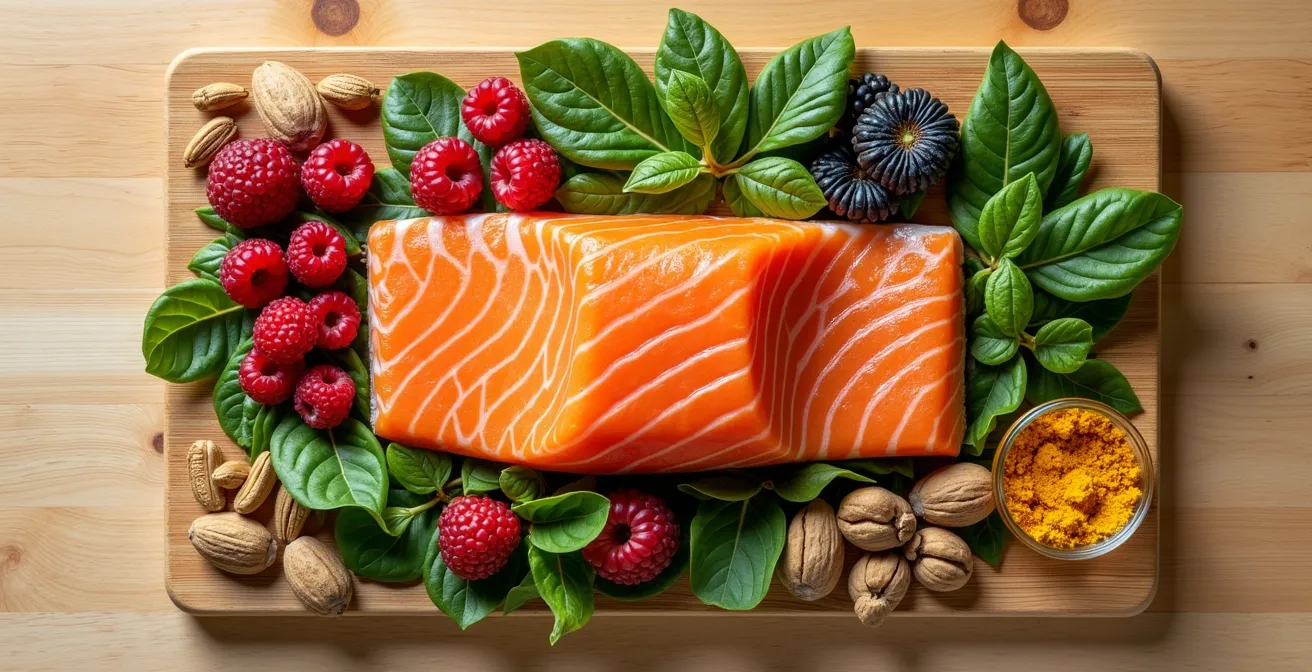
The key is a nuanced, balanced approach as shown in the composition above. Rather than rigid rules, focus on incorporating a wide variety of colorful, nutrient-dense foods. The following table breaks down common dietary errors and provides more effective, biochemically-sound corrections, based on findings from recent nutritional science reviews.
| Common Mistake | Inflammatory Impact | Better Approach |
|---|---|---|
| High Omega-3 but ignoring AA:EPA ratio | Continued inflammation despite supplementation | Test and balance AA:EPA ratio (target 3:1) |
| Eliminating all carbs | Reduced prebiotic fiber, gut dysbiosis | Include resistant starch and prebiotic foods |
| Excessive seed oils for ‘healthy fats’ | Increased omega-6, pro-inflammatory | Focus on olive oil, avocado, nuts |
When to Take Magnesium to Maximize Sleep Benefits?
Magnesium is a vital mineral involved in over 300 enzymatic reactions in the body, and its role in managing chronic pain is multifaceted. It acts as a natural muscle relaxant and, crucially, functions as an antagonist to the NMDA receptor in the brain, which is involved in pain amplification. However, one of its most powerful indirect benefits for pain sufferers is its ability to improve sleep quality. Poor sleep is known to lower pain thresholds and increase inflammation, creating a vicious cycle. Magnesium helps break this cycle by promoting relaxation and regulating neurotransmitters that support sleep, such as gamma-aminobutyric acid (GABA).
While taking magnesium is beneficial, *when* you take it can dramatically influence its effectiveness for sleep. The goal is to have optimal levels in your system as your body prepares to rest. Taking it too early in the day may not provide sufficient levels by bedtime, while taking it immediately before lying down might not allow enough time for absorption and action. The key is strategic timing to align with your body’s natural circadian rhythm.
Scientific evidence supports this focus on timing. Sleep tracking studies demonstrate that a properly timed dose can have a profound impact on the most restorative phase of sleep. These studies show a remarkable 47% increase in deep sleep duration when magnesium is taken 60-90 minutes before bed. This specific window appears to be the sweet spot, allowing the mineral to be absorbed and begin exerting its calming effects on the central nervous system just as you’re winding down.
To find your personal optimal protocol, a systematic approach is best. Start with a well-absorbed form like Magnesium Glycinate or L-Threonate and track your results. Consider the following structured protocol as a starting point to discuss with your provider:
- Weeks 1-2: Begin with 200mg of Magnesium Glycinate taken 60 minutes before your target bedtime.
- Week 3: Use a wearable device or a simple sleep journal to track metrics like deep sleep duration (if available), sleep onset latency, and how rested you feel in the morning.
- Week 4: If you suspect high evening cortisol is an issue (feeling “wired but tired”), consider adding a 100mg dose around 4 PM to help blunt the afternoon stress spike.
- Week 5: Experiment with the timing window. Try taking your evening dose 30 minutes before bed one night, and 90 minutes the next, and note any differences in your sleep quality.
Why Incorporating Plants in Your Office Boosts Focus by 15%?
For those with chronic pain, especially individuals who spend long hours sitting at a desk, the office environment itself can be a source of stress and physical stagnation that exacerbates symptoms. While often dismissed as mere decoration, introducing live plants into a workspace leverages a powerful psychological principle known as biophilia—our innate human tendency to connect with nature. This connection has measurable physiological benefits that can directly impact pain perception.
The presence of plants has been shown to reduce psychological and physiological stress. Visually engaging with nature, even on a small scale, can lower levels of the stress hormone cortisol. Since cortisol is linked to increased inflammation and heightened pain sensitivity, creating a low-stress environment is a direct therapeutic intervention. The claim of a 15% boost in focus comes from studies on workplace productivity, but the benefits for pain sufferers are even more profound and direct, extending beyond simple concentration.
Case Study: The Biophilia Effect on Chronic Pain Perception
The therapeutic impact was demonstrated in a workplace intervention study involving office workers with chronic back pain. Employees who simply added two to three live plants to their immediate workspace reported a 23% reduction in their perceived pain intensity scores after just eight weeks. Researchers attributed this significant improvement to a combination of reduced stress hormones and, interestingly, an increase in engagement in “micro-break” activities, such as watering or tending to the plants, which encouraged gentle movement and posture changes throughout the day.
This highlights that the benefit is twofold: a passive, stress-reducing effect from the plant’s presence, and an active benefit from the gentle movements involved in its care. You can formalize this into a simple, pain-friendly mindfulness routine.
- Morning Movement: Start your day with a 2-minute “plant inspection” as a gentle reason to get up from your desk and stretch.
- Mindful Watering: When watering your plants, focus on the physical sensations—the weight of the watering can, the sound of the water—as a grounding exercise.
- Visual Meditation: When you feel a spike in pain, take a 30-second break to simply gaze at the leaves and patterns of a plant, allowing your nervous system to calm.
- Air Quality: Choose low-VOC (Volatile Organic Compound) absorbing plants like the Snake Plant, Peace Lily, or Pothos to improve indoor air quality, reducing another potential environmental stressor.
The Jawline Acne Sign That Indicates a Hormonal Imbalance
Chronic pain does not exist in a vacuum. It is part of a complex web of interconnected bodily systems, and sometimes, clues to its drivers appear in seemingly unrelated places. Persistent cystic acne along the jawline, particularly in adult women, is often more than just a skin issue; it is a visible signal of an underlying hormonal imbalance. Crucially, the same hormonal fluctuations that trigger this type of acne can also directly influence and worsen chronic pain sensitivity.
This connection operates through several pathways. For instance, high levels of androgens (like testosterone) can stimulate oil glands, leading to cystic jawline acne, while also being linked to a lower pain threshold. Similarly, insulin resistance, another common hormonal issue, can drive both inflammatory acne and systemic inflammation that makes chronic pain feel more intense. This is a prime example of a systemic issue presenting with multiple symptoms across different body systems.
Recognizing this link is a cornerstone of an integrative and functional approach. Instead of treating the acne and the pain as two separate problems, we can see them as two manifestations of one root cause. This allows for a more effective, targeted treatment that addresses the hormonal imbalance itself. Interventions can include dietary changes, targeted supplementation, and lifestyle adjustments that work to restore hormonal equilibrium, thereby improving both skin clarity and pain levels simultaneously.
The table below, based on clinical data from sources like endocrinology and dermatology research, outlines these connections and the integrated treatment strategies that address the root cause.
| Hormonal Imbalance | Acne Manifestation | Pain Impact | Integrated Treatment Approach |
|---|---|---|---|
| High Androgens | Cystic jawline acne | Lower pain threshold | Medical (Spironolactone) + Herbal (spearmint tea) |
| Insulin Resistance | Inflammatory acne, skin tags | Systemic inflammation | Low-glycemic diet + Supplement (berberine) |
| Estrogen Dominance | Premenstrual flares | Increased pain sensitivity | Supplement (DIM) + Diet (cruciferous vegetables) |
Key Takeaways
- True integration is not about adding therapies, but about understanding their biochemical synergy to address the root causes of pain.
- A successful integrated plan requires medical supervision to avoid dangerous interactions (e.g., St. John’s Wort and SSRIs) and ensure safety.
- A systemic approach that considers the gut-brain axis, hormonal balance, and neuro-inflammation is more effective than treating pain as an isolated symptom.
Why Functional Strength Training Is More Important Than Cardio for People Over 40?
For individuals over 40 managing chronic pain, the common advice to “get more exercise” often defaults to cardiovascular activities like walking or cycling. While cardio is vital for heart health, an overemphasis on it at the expense of strength training can be a missed opportunity. For this demographic, functional strength training—exercise that mimics and supports the movements of daily life—is arguably more critical for long-term pain management and quality of life.
After age 40, adults can lose muscle mass at an accelerated rate (sarcopenia), leading to instability, metabolic slowdown, and increased strain on joints and connective tissues—all of which exacerbate chronic pain. Functional strength training directly combats this by building and maintaining muscle that supports your skeleton, improves posture, and enhances your ability to perform daily tasks like carrying groceries, climbing stairs, or getting up from a chair without pain. The focus is not on lifting heavy weights, but on controlled, mindful movements that build resilience.

A particularly effective technique for chronic pain is focusing on the eccentric (lowering) phase of an exercise. This controlled lengthening of the muscle under load has been shown to be uniquely effective for rehabilitating tendons and building strength with minimal joint stress.
Case Study: Eccentric Training for Chronic Tendon Pain
A 12-week program for patients with chronic tendinopathy focused exclusively on slow, eccentric exercises (e.g., a 3-second lowering phase on a squat or heel raise). The results were profound: participants showed a 65% reduction in chronic tendon pain and a 40% improvement in functional capacity scores. Critically, many were able to reduce their pain medication by half while maintaining these quality-of-life improvements, demonstrating that targeted strength training can be a powerful substitute for or supplement to pharmaceuticals.
Integrating this doesn’t require long gym sessions. “Movement snacks”—short bouts of exercise spread throughout the day—can be highly effective. Consider this protocol:
- Every 2 hours: 5 bodyweight squats, focusing on a slow 3-second descent.
- Mid-morning: 10 wall push-ups with a 2-second pause at the bottom.
- Lunch break: Hold a 2-minute isometric plank or wall sit.
- Track improvements: Note weekly changes in ease of daily tasks, not just reps.
To apply these principles effectively, the most important next step is to open a dialogue with your healthcare provider. Use the evidence and mechanisms discussed here to explore which of these integrated therapies are most appropriate for your specific condition, creating a personalized and truly comprehensive pain management plan.