
The key to all-day energy isn’t hitting a perfect macro ratio, but timing your nutrients to optimize your body’s hormonal signals.
- A protein-first breakfast stabilizes blood sugar and prevents cravings later in the day.
- The quality of your carbs and fats directly impacts hormone production and inflammation.
- Listening to your body’s cues is more effective than rigidly tracking calories, which can lead to burnout.
Recommendation: Shift your focus from “what percentage?” to “what, when, and why?” for each meal to finally beat the afternoon slump.
It’s a familiar story for countless professionals: you power through the morning, have a “healthy” lunch, and then, like clockwork, the wall hits. Around 3 PM, your focus evaporates, your eyelids feel heavy, and the only thing you can think about is a nap or a sugary snack. You’ve tried everything—counting calories, tracking macros to a perfect 40/30/30 split, maybe even cutting carbs—but the crash always returns. This frustrating cycle leaves you feeling like you’ve failed, but the problem isn’t your willpower.
The common advice to simply “balance your macros” or “eat complex carbs” is incomplete. It treats your body like a simple calculator, ignoring the complex symphony of hormones that truly dictates your energy levels. The real culprit behind the afternoon slump isn’t just the food you eat, but the hormonal messages that food sends. A meal heavy in simple carbs triggers a sharp insulin spike and subsequent crash, while a diet too low in fat starves your body of the building blocks needed for crucial hormones like cortisol and estrogen.
But what if the solution wasn’t about more rigid tracking, but about a smarter, more intuitive approach? What if the key to unlocking steady, all-day energy lies not in obsessive counting, but in understanding how to time your nutrients to work *with* your hormonal systems, not against them? This is the principle of nutrient timing and hormonal signaling—a strategy that moves beyond generic ratios to address the root cause of your fatigue.
This guide will deconstruct the conventional wisdom and provide a new framework. We will explore how to structure your meals to manage insulin, support hormone production, and finally put an end to the daily energy rollercoaster. It’s time to stop fighting your body and start fueling it with intention.
Summary: Adjusting Your Macronutrients for Sustained Energy
- Why Eating 30g of Protein at Breakfast Stops Nighttime Snacking?
- Simple vs Complex Carbs: Which Fuel Provides Steady Focus for 4 Hours?
- Low-Fat Diet Risks: Why Your Hormones Need Cholesterol to Function?
- The Calorie Tracking Trap That Leads to Binge Eating
- What to Eat 30 Minutes Before a Workout to Prevent Dizziness?
- The “Cooked, Peeled, or Forgotten” Rule to Avoid Food Poisoning Abroad
- The Anti-Inflammatory Diet Mistake That Sabotages Your Healing
- How to Combine Conventional Medicine with Holistic Practices for Chronic Pain Relief?
Why Eating 30g of Protein at Breakfast Stops Nighttime Snacking?
The battle for your afternoon energy is often won or lost before 10 AM. Starting your day with a carb-heavy meal like a pastry or sugary cereal sets off a chain reaction: a rapid blood sugar spike followed by an insulin surge that leads to a crash and cravings hours later. A protein-centric breakfast, however, rewrites this script by creating a “satiety cascade.” Protein is the most satiating macronutrient, meaning it keeps you feeling full and satisfied for longer, effectively shutting down the hormonal signals that drive you to snack.
As Cleveland Clinic endocrinologist Dr. Divya Yogi-Morren explains, diet has a powerful effect on our body’s chemistry:
Not all hormones can be affected by diet, but some important ones can. The No. 1 hormone that can be affected by diet is insulin.
– Dr. Divya Yogi-Morren, Cleveland Clinic endocrinologist
By prioritizing protein at your first meal, you blunt the insulin response and promote the release of peptides like PYY and GLP-1, which tell your brain you’re full. This isn’t just about feeling less hungry; it’s about fundamentally altering your cravings for the rest of the day. In fact, compelling research suggests that eating about 30 grams of protein for breakfast can significantly improve appetite control and reduce unhealthy snacking in the evening. This simple shift from a “carb-first” to a “protein-first” morning establishes metabolic stability that lasts far beyond lunchtime.
Simple vs Complex Carbs: Which Fuel Provides Steady Focus for 4 Hours?
Not all carbohydrates are created equal, and their impact on your focus and energy is dramatically different. Think of simple carbs—like those in white bread, sugary drinks, and pastries—as kindling for a fire. They ignite quickly, providing a burst of heat (energy), but burn out just as fast, leaving you cold and needing more fuel. This is the biological reality of a blood sugar rollercoaster: a rapid spike in glucose followed by a sharp crash that tanks your concentration and leaves you feeling foggy and fatigued.
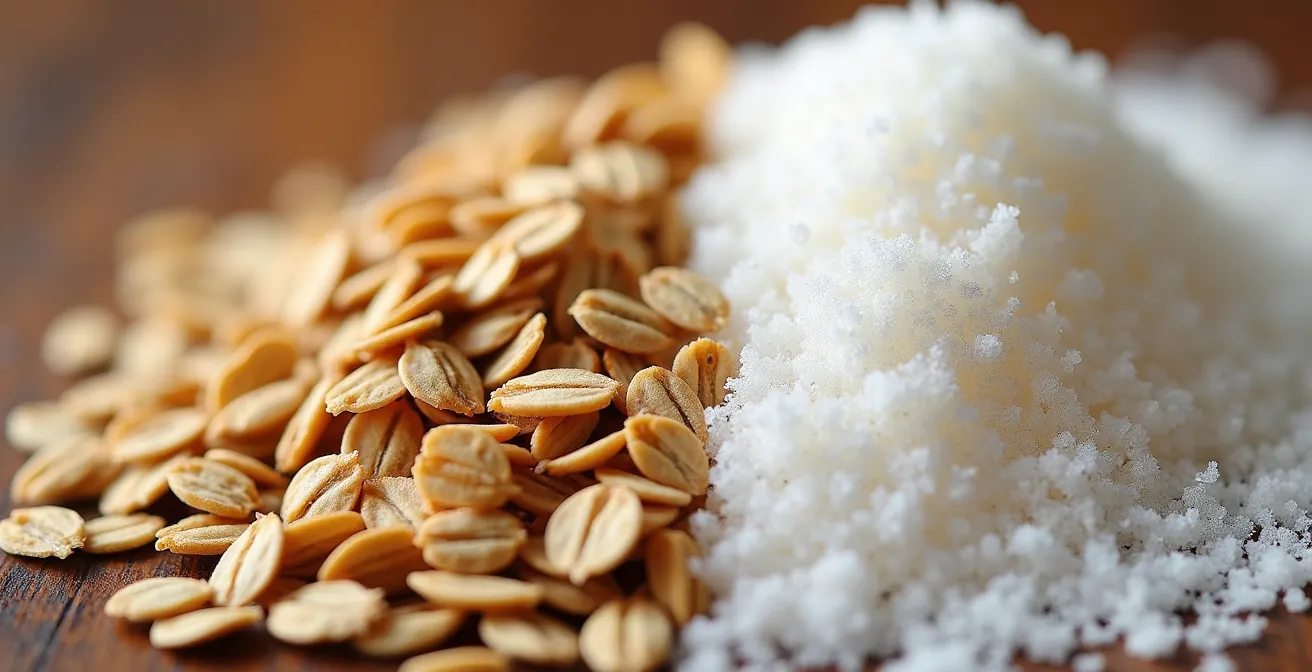
Complex carbohydrates, on the other hand, are like a dense log. Found in foods like quinoa, oats, sweet potatoes, and legumes, their fibrous structure requires your body to work harder to break them down. As you can see in the textural comparison above, the intricate structure of whole grains is fundamentally different from refined sugar. This slow-burning process results in a gradual, sustained release of glucose into the bloodstream. Instead of a volatile spike and crash, you get a steady stream of fuel that can power your brain and body for hours, maintaining stable focus and preventing the dreaded afternoon slump.
To ensure this steady energy supply, it’s crucial to pair your complex carbs with protein and healthy fats. This combination further slows down digestion and absorption, creating an even more stable energy curve. Swapping a piece of white toast for a bowl of oatmeal with nuts and seeds is not just a food choice; it’s a strategic decision to trade volatile, short-term energy for reliable, long-lasting focus. This is a core principle of effective nutrient timing.
Low-Fat Diet Risks: Why Your Hormones Need Cholesterol to Function?
For decades, fat was demonized, leading many health-conscious individuals to adopt low-fat diets in pursuit of better health. However, this approach often backfires, particularly when it comes to energy and hormonal balance. Fats are not just a source of calories; they are essential structural components for your body. The cholesterol found in dietary fats is the precursor to all your major steroid hormones, including cortisol (your stress hormone), estrogen, and testosterone. Severely restricting fat intake is like trying to build a house without bricks—your body simply lacks the raw materials to function correctly.
When hormone production falters due to a lack of dietary fat, the consequences can be widespread, leading to irregular cycles, low libido, and, critically, dysregulated energy levels. Nutritional guidelines reflect this importance, suggesting you should try to get 20% to 35% of your total daily calories from fat. This isn’t just for general health; it’s to ensure your endocrine system has what it needs. A lack of healthy fats can leave you feeling perpetually drained, no matter how “clean” the rest of your diet is.
Furthermore, lipids are vital for absorbing fat-soluble vitamins (A, D, E, and K), which are themselves co-factors in countless metabolic processes. As research highlights, essential fatty acids like omega-3 and omega-6 are not optional. A case study on nutrient function shows that lipids are an essential macronutrient that must be sufficient in the diet to provide essential fatty acids and allow for the absorption of fat-soluble vitamins. As confirmed by an in-depth analysis of lipid metabolism, certain fats like alpha-linolenic acid (omega-3) and linoleic acid (omega-6) are indispensable for proper hormone synthesis. Avoiding fat is not the answer; the key is choosing high-quality sources like avocados, nuts, seeds, and olive oil to fuel your hormonal health.
The Calorie Tracking Trap That Leads to Binge Eating
In the quest for better energy and health, many people turn to calorie and macro tracking apps. While they can be useful for initial education, they often become a trap. The hyper-focus on numbers can disconnect you from your body’s innate hunger and satiety cues, fostering a relationship with food built on restriction and guilt rather than nourishment. This rigid, numbers-driven approach can paradoxically lead to burnout and even rebound binge eating when the mental fatigue of constant tracking becomes too much.

The alternative is to shift towards a more intuitive model of eating, where you learn to build a balanced plate based on visual cues and internal signals rather than external calculations. A simple and effective method is the “Plate Method”: aim to fill half your plate with non-starchy vegetables, a quarter with a quality protein source, and a quarter with a complex carbohydrate. This visual guide naturally encourages a nutrient-dense, balanced intake without the mental overhead of weighing and measuring every morsel. It champions food quality and honors your body’s signals.
This approach moves the focus from “how many calories?” to “what is the quality of these calories?”. A 500-calorie meal of grilled chicken, quinoa, and roasted broccoli will have a vastly different and more beneficial hormonal effect than a 500-calorie meal of processed snacks. By trusting your body and focusing on whole, unprocessed foods, you can achieve better energy and metabolic health without the psychological burden of obsessive tracking. It is a more sustainable path to long-term metabolic flexibility.
What to Eat 30 Minutes Before a Workout to Prevent Dizziness?
Feeling dizzy or lightheaded during a workout is a clear sign that your body has run out of readily available fuel. This is especially common during afternoon sessions when your energy stores from lunch may already be depleted. To prevent this, you need a strategic pre-workout snack that provides quick, easily digestible energy without causing digestive distress. The key is to consume a small amount of fast-acting carbohydrates and protein about 30-60 minutes before you start exercising.
A large, heavy meal is the enemy here; it will divert blood flow to your stomach for digestion, robbing your muscles of the oxygen and nutrients they need. Instead, you need a targeted snack that your body can absorb and utilize almost instantly. A piece of fruit like a banana or a couple of dates provides the quick-release carbohydrates, while a small serving of fast-absorbing protein like whey or essential amino acids helps stabilize blood sugar and prepare your muscles for work. According to some health experts, most people should aim for 30-50 grams of protein at each meal to maintain consistent energy, and a smaller dose pre-workout fits into this strategy.
This approach ensures your muscles have the immediate glucose they need for performance while preventing the blood sugar crash that can lead to dizziness. It’s a perfect example of nutrient timing in action—giving your body exactly what it needs, right when it needs it.
Your Pre-Workout Energy Protocol
- 30 minutes before: Consume a small, fast-acting carb source like a date or a small banana for quick energy.
- Pair with protein: Add 5-10g of a fast-absorbing protein like whey isolate or essential amino acids (EAAs) to stabilize blood sugar.
- Balance electrolytes: Add a pinch of sea salt to your water to help with hydration and nerve function.
- Keep portions small: Aim for a total of 150-200 calories to avoid digestive discomfort during your workout.
- Choose wisely: Opt for rapidly-digestible options over fiber-rich complex carbs for immediate fuel availability.
The “Cooked, Peeled, or Forgotten” Rule to Avoid Food Poisoning Abroad
Maintaining energy while traveling isn’t just about beating jet lag; it’s also about protecting your gut health. An encounter with traveler’s diarrhea or food poisoning can completely derail your trip and leave you feeling weak and depleted for days. The “Cooked, Peeled, or Forgotten” rule is a simple yet powerful mantra for making safe food choices in unfamiliar environments. If a food item isn’t freshly cooked and served hot, or isn’t a fruit or vegetable that you can peel yourself, you should consider forgetting it. This simple filter helps you avoid the most common sources of contamination, like raw salads, unpeeled fruits, and lukewarm buffet items.
This rule is about more than just avoiding bacteria; it directly ties into maintaining your energy. A compromised gut from even a mild foodborne illness can trigger inflammation and impair nutrient absorption, leading to fatigue and brain fog. Furthermore, travel often involves a diet higher in ultra-processed foods, which can wreak havoc on your blood sugar. One case study on travel health notes that a diet rich in ultra-processed foods and sugar can create a blood sugar rollercoaster, impacting not only daytime energy but also sleep quality, thus creating a cycle of fatigue that is particularly problematic when traveling. By sticking to safe, whole foods, you support both gut integrity and stable energy levels.
Applying this rule helps you navigate menus and markets with confidence, ensuring your body gets the clean fuel it needs. The table below provides a clear guide on making smart, energy-sustaining choices on the road.
| Safe Options | Risky Options | Energy Impact |
|---|---|---|
| Cooked vegetables | Raw salads | Sustained energy from cooked fiber |
| Peeled fruits | Unwashed berries | Natural sugars without contamination risk |
| Bottled water | Tap water/ice | Proper hydration maintains energy |
| Hot cooked meats | Cold cuts/buffets | Safe protein for stable blood sugar |
The Anti-Inflammatory Diet Mistake That Sabotages Your Healing
Many people adopt an “anti-inflammatory” diet by adding foods like turmeric and salmon but overlook a far more critical factor: the type of fats and oils they consume daily. The most common mistake is an overconsumption of omega-6 fatty acids, which are prevalent in processed foods and common cooking oils like soybean, corn, and sunflower oil. While omega-6s are essential in small amounts, modern diets are so saturated with them that they create a pro-inflammatory environment in the body, actively sabotaging healing and contributing to chronic fatigue.
The key to controlling diet-induced inflammation lies in the balance between omega-6 and omega-3 fatty acids. Omega-3s, found in fatty fish, flaxseeds, and walnuts, have powerful anti-inflammatory properties. The ideal ratio of omega-6 to omega-3 is around 4:1 or even lower, but the standard Western diet often pushes this ratio to a staggering 20:1. As nutritional research shows, this significant imbalance in the ratio of omega-3 to omega-6 fatty acids is a major contributor to systemic inflammation and can disrupt hormone balance, further impacting energy levels.
Correcting this imbalance is one of the most impactful changes you can make. It involves consciously reducing processed foods and industrial seed oils while actively increasing your intake of omega-3-rich foods. This shift helps to quiet the body’s inflammatory response, which not only supports healing but also frees up metabolic resources, resulting in more stable and robust energy. Ignoring this fat-quality mistake while focusing only on adding a few “superfoods” is like trying to put out a fire with a squirt gun while someone is pouring gasoline on it.
Key takeaways
- The timing and quality of your macros are more important for energy than hitting a specific ratio.
- Start your day with at least 30g of protein to stabilize blood sugar and control cravings for the entire day.
- Healthy fats are not the enemy; they are essential building blocks for the hormones that regulate your energy and mood.
- Trade calorie-tracking apps for intuitive eating principles to build a more sustainable and less stressful relationship with food.
How to Combine Conventional Medicine with Holistic Practices for Chronic Pain Relief?
For those managing chronic pain, energy is an especially precious resource. The pain itself is draining, and medications can often come with side effects like fatigue and brain fog. An integrative approach that combines conventional medical treatments with strategic nutritional practices can be transformative. Fueling your body correctly doesn’t just provide energy; it creates an internal environment that supports healing, reduces inflammation, and can even enhance the efficacy of pain management protocols. The goal is to use nutrition as a complementary tool to help your body function optimally while under the stress of chronic pain.
A key holistic practice is to focus on macronutrient balance to preserve lean muscle mass. Chronic pain can lead to inactivity, causing muscle atrophy, which in turn lowers your metabolic rate and overall vitality. A diet sufficient in high-quality protein is crucial to counteract this. As one study on metabolic health explains, consuming the right balance of macros helps blunt hunger, prompt fat burning, and preserve muscle. Specifically, when you prioritize protein while managing carbohydrates, you encourage the body to lose fat while preserving essential muscle tissue, which is vital for maintaining physical function during pain management. This insight, drawn from research on metabolic efficiency, shows that macros do more than provide energy—they direct your body’s response to stress.
This means working alongside your medical treatments to ensure your diet is rich in anti-inflammatory omega-3 fats, packed with protein to support muscle, and built around complex carbohydrates for steady energy. Coordinating meal timing with your medication schedule can also optimize absorption and minimize side effects. This integrative strategy empowers you to take an active role in your well-being, using food not as a cure, but as a powerful ally in your journey to reclaim energy and manage pain more effectively.
To truly master your energy, the next logical step is to start applying these principles not as a rigid diet, but as a new way of thinking about food. Begin today by focusing on building your next meal around protein, healthy fats, and smart carbs, and notice how your body responds.
Frequently Asked Questions on Macronutrients and Energy
Is there a specific macro ratio that leads to weight loss?
There’s no single magic macro ratio that guarantees weight loss for everyone. While some research suggests that higher-protein diets can be more effective for weight loss than standard-protein diets, the most important factor is creating a sustainable calorie deficit. The ideal ratio often depends on individual factors like activity level, metabolic health, and personal preferences.
Should I track macros long-term or can I stop eventually?
Macro tracking is best used as a short-term educational tool. Many people who count macros for a period gain a general understanding of the composition of their everyday foods. They can then transition to a more intuitive approach once they’ve established a healthy routine. However, those with highly diversified diets or specific performance goals may find it beneficial to continue tracking more consistently.
What’s more important: tracking calories or tracking macros?
While calories determine weight gain or loss, macros determine body composition and how you feel. Different types of calories affect your digestion, hunger, appetite, and energy levels differently. For instance, a 500-calorie meal rich in protein and fiber will support your goals far better than a 500-calorie meal of simple sugars and unhealthy fats, which could make reaching your goals much harder.