The key to avoiding tourist traps isn’t a checklist of red flags, but learning to read a city’s entire food system like an expert.
- Authentic dining reveals itself in the freshness of a central market and the logic of a seasonal menu, not just a restaurant’s location.
- Street food and fine dining are not opposites; they are two essential dialects of the same cultural language, expressing daily life and artistic ambition.
Recommendation: To find a city’s true flavor, stop looking for restaurants and start decoding its culinary ecosystem, focusing on ingredient provenance and its unique bio-cultural rhythms.
There is no greater travel disappointment than the tourist trap meal. The laminated menu with faded photos, the indifferent service, the suspiciously uniform dishes, and the final bill that adds insult to injury. We’ve all been there. The common advice is a litany of things to avoid: restaurants near major landmarks, menus in five languages, aggressive hosts beckoning you from the street. While sound, this approach is purely defensive. It helps you dodge the bad, but it doesn’t guarantee you’ll find the sublime.
The true art of eating well in a new city isn’t about avoidance; it’s about active discovery. It requires a shift in perspective from a tourist hunting for a meal to a critic deciphering a culture. The secret isn’t a better checklist, but developing what can be called food system literacy. This is the ability to read the subtle clues embedded in a city’s markets, its harvest schedules, its historical context, and even its daily energy patterns. It’s about understanding the entire culinary ecosystem, from the farm to the fine-dining table.
This guide moves beyond the platitudes. We won’t just tell you what to avoid. Instead, we will equip you with a new lens to analyze a city’s food culture. By understanding the foundational role of its central market, learning the strategies for accessing its most creative kitchens, and even connecting its meal structures to its work-life rhythm, you will learn to navigate any city’s food scene with the confidence and discernment of a local connoisseur.
To help you master this discerning approach, this guide breaks down the essential skills for decoding a city’s culinary soul. We will explore everything from the raw-ingredient intelligence of a central market to the high-concept artistry of a tasting menu, providing you with a complete framework for your next culinary journey.
Summary: A Critic’s Guide to Decoding a City’s Food System
- Why Visiting the Central Market Is the Quickest Way to Understand a Culture?
- How to Get a Table at Michelin-Starred Restaurants Without Booking months Ahead?
- Street Food Tour vs Tasting Menu: Which Offers Better Culinary Insight?
- The “Cooked, Peeled, or Forgotten” Rule to Avoid Food Poisoning Abroad
- How to Order the Best Dishes by Knowing the Local Harvest Calendar?
- Why Reading About a Site’s History Beforehand Doubles Your Appreciation?
- Why Eating 30g of Protein at Breakfast Stops Nighttime Snacking?
- How to Adjust Your Macronutrient Ratio to Eliminate the Afternoon Energy Crash?
Why Visiting the Central Market Is the Quickest Way to Understand a Culture?
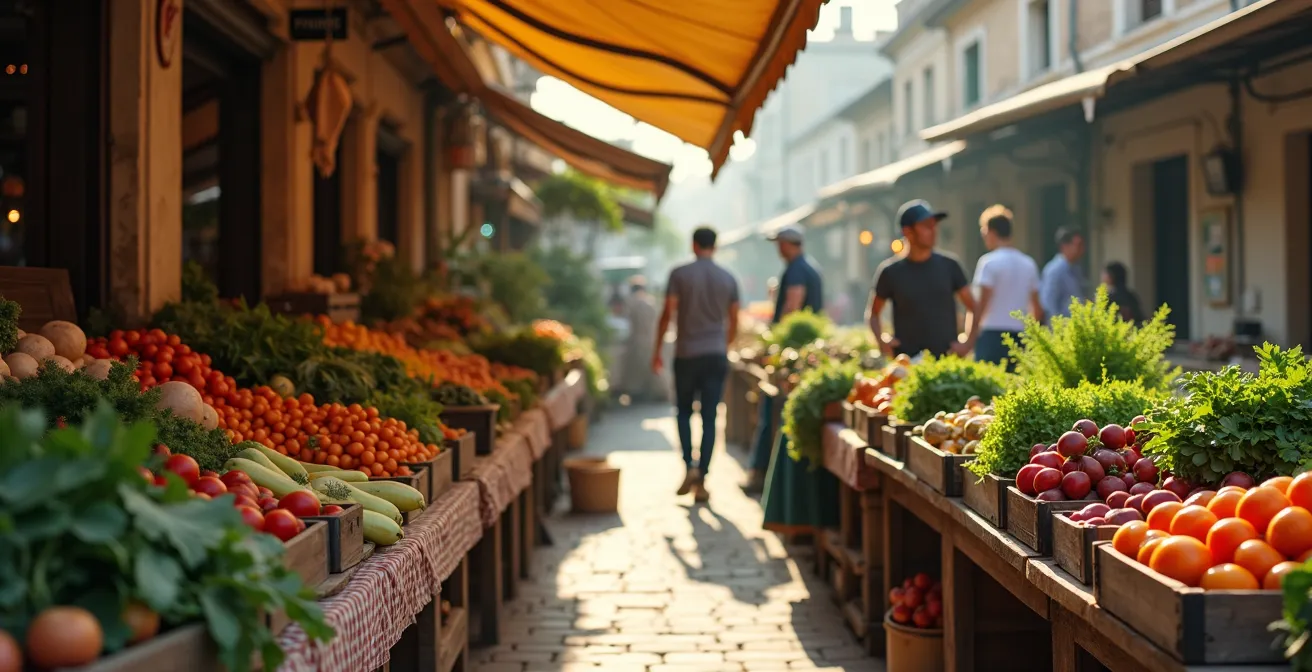
Before you even think about a restaurant, your first stop in any city should be its central market. This is not a quaint sightseeing detour; it is the most critical intelligence-gathering mission you can undertake. A market is a city’s living pantry, the source code of its culinary identity. The quality, variety, and arrangement of products on display tell you everything about what the locals truly value. It’s here that you find the unadulterated truth of the local palate, where freshness and flavor are paramount. In fact, a recent Food Control survey reveals that 97% of farmers market customers rate product freshness and flavor as deeply significant.
Observe the ecosystem. Which vegetables are piled highest? What cuts of meat are most prominent? Are there more stalls dedicated to fresh fish or cured sausages? These are not random assortments; they are data points revealing the bedrock of the local diet. The market is where you learn the names of local fish, discover the specific herbs that form the aromatic backbone of the cuisine, and see the real color of a sun-ripened tomato, not its pale supermarket ghost. This ingredient provenance is the foundation of all authentic cooking.
To truly decode this information, you must move beyond passive observation and engage in active analysis. The layout of the market itself is a cultural map, and learning to read it is your first lesson in food system literacy.
Action Plan: Market Layout Cultural Reading Guide
- Map the zones: Identify the butchers’ row, fishmongers’ section, and preserved goods areas to understand the hierarchy of ingredients in the local diet.
- Calculate ratios: Gauge the local cooking culture by comparing the ratio of raw ingredient stalls to ready-to-eat food vendors.
- Seek imperfection: Look for non-standardized, cosmetically imperfect produce as a clear indicator of direct, short-chain farm-to-market sourcing.
- Listen to the language: Pay attention to interactions between vendors and local customers, noting the specific terminology used to describe quality, ripeness, or texture.
- Observe the rhythm: Note the market’s peak shopping hours to understand when locals are buying ingredients, which directly reflects their daily meal preparation rhythms.
How to Get a Table at Michelin-Starred Restaurants Without Booking Months Ahead?
While markets reveal a culture’s daily palate, its high-end restaurants showcase its artistic ambitions. Many travelers assume Michelin-starred establishments are inaccessible fortresses of exclusivity, requiring reservations made with the foresight of an astrophysicist. This is a common misconception. While top-tier restaurants do book out, the savvy diner knows that the system has backdoors, especially for those who are flexible and strategic. These last-minute opportunities often provide a more dynamic and educational experience than a standard table booking.
One of the most effective strategies is to aim for non-traditional seating. Bar seating and chef’s counters are often held for walk-ins or last-minute calls. These seats transform a meal into a masterclass, offering a direct view of the kitchen’s ballet and fostering interaction with the chefs and sommeliers. This turns a simple dinner into a deep dive into culinary philosophy and technique.
Case Study: The Chef’s Counter Strategy
Renowned food vlogger Mark Wiens has built a career on this very tactic. During his global travels, he frequently leverages bar and chef’s counter seating at world-class restaurants, from Bangkok to Mexico City. His experiences demonstrate that these seats, often available at the last minute, provide an unparalleled front-row seat to the culinary action. Rather than a compromised experience, it becomes an immersive one, filled with direct explanations from the chefs about ingredient provenance and preparation, offering insights you’d never get at a private table.
Beyond the chef’s counter, several other tactics can unlock last-minute fine dining. Timing and target selection are everything. Instead of fixating on the three-star behemoth, consider its more accessible siblings. With the right approach, a world-class meal is often just a phone call away.
- Target the lunch service instead of dinner; it often features the same kitchen philosophy and technique with far greater availability.
- Focus on newly-awarded one-star restaurants or Green Star establishments, which are still building their reputation and may have more flexibility.
- Call on Tuesday or Wednesday mornings. These are the most common times for business travelers to alter plans, opening up same-day cancellations.
- Leverage the relationships of concierges at luxury hotels; they often have access to cancellation lists and held tables.
- Use dedicated apps that specialize in last-minute fine dining reservations, which have become a key part of the modern culinary ecosystem.
Street Food Tour vs Tasting Menu: Which Offers Better Culinary Insight?
The debate between street food and fine dining is often framed as a battle for authenticity: the “real” food of the people versus the “artificial” creations of the elite. This is a false and unproductive dichotomy. A discerning critic understands that street food and tasting menus are not competitors; they are two complementary narratives about a culture’s relationship with food. One tells the story of its history, economy, and daily rituals, while the other reveals its future, its artistic aspirations, and its place in the global conversation. To truly understand a city, you need to listen to both.
A street food tour is a lesson in culinary anthropology. It’s an immersion into the historical palate of a place, shaped by generations of economic necessity and communal life. You learn directly from vendors whose recipes have been passed down, observing cooking techniques honed for speed and flavor. It is immediate, visceral, and deeply connected to the rhythm of daily life.
Conversely, a tasting menu is a curated exhibition of culinary artistry. It’s where a chef synthesizes local ingredient provenance with global techniques and personal vision. This is not less “authentic”; it is a different kind of authenticity—one focused on intellectual and sensory exploration. It answers the question, “How does this culture think about the art of food?”

As the image above illustrates, the hands preparing street tacos and the hands plating a delicate dish are engaged in the same fundamental act: transforming raw ingredients into a cultural statement. The choice between them depends entirely on the question you are trying to answer.
| Aspect | Street Food Tour | Tasting Menu |
|---|---|---|
| Cultural Context | Historical everyday palate shaped by economy | Artistic future vision and global conversation |
| Price Range | $10-30 per person | $150-400 per person |
| Time Investment | 2-4 hours walking tour | 2-3 hours seated experience |
| Learning Style | Direct vendor interaction, visual cooking process | Chef/sommelier presentations, philosophy discussions |
| Best For Understanding | What a culture eats daily | How a culture thinks about food artistry |
The “Cooked, Peeled, or Forgotten” Rule to Avoid Food Poisoning Abroad
The traveler’s mantra for food safety—”boil it, cook it, peel it, or forget it”—is a decent starting point, but it’s a blunt instrument from a bygone era of travel. It encourages fear and avoidance rather than educated observation. A truly discerning diner doesn’t just follow rules; they develop an eye for the signs of safety and quality that are embedded in a local food culture. Your best defense against illness isn’t a rigid rulebook, but your own sharpened sense of observation, a core component of food system literacy.
The most common advice, “eat where the locals eat,” is sound because a busy restaurant, especially one with a high turnover of local clientele, is a powerful indicator of food safety. High volume means ingredients are fresh and not sitting around. Indeed, research shows that authentic local restaurants typically have a clientele composed of 60-80% locals, a strong signal of both quality and trust. However, you can go deeper than just crowd-spotting.
You need to actively look for “self-cleaning” mechanisms and systems of quality control built into a vendor’s process. These are the subtle clues that separate the masters from the mishaps.
- Extreme specialization: A vendor who makes only one dish (e.g., pho, tacos al pastor) has perfected their process and maintains much tighter quality control over a small number of ingredients. This is a sign of mastery, not limitation.
- Visible high heat: Look for the roaring flame of a wok or the glowing embers of a charcoal grill. Extreme heat is a powerful sterilizer, and its constant use is a built-in safety feature.
- Methodical cleanliness: Watch the vendor’s hands and workspace. Do they have a clear system for handling money versus food? Do they methodically wipe down surfaces between orders? This ritualistic cleanliness is a better sign than any certificate on the wall.
- Commitment to traceability: In more formal settings, look for menus that display the names of their farms or suppliers. This indicates a commitment to ingredient provenance and accountability.
How to Order the Best Dishes by Knowing the Local Harvest Calendar?
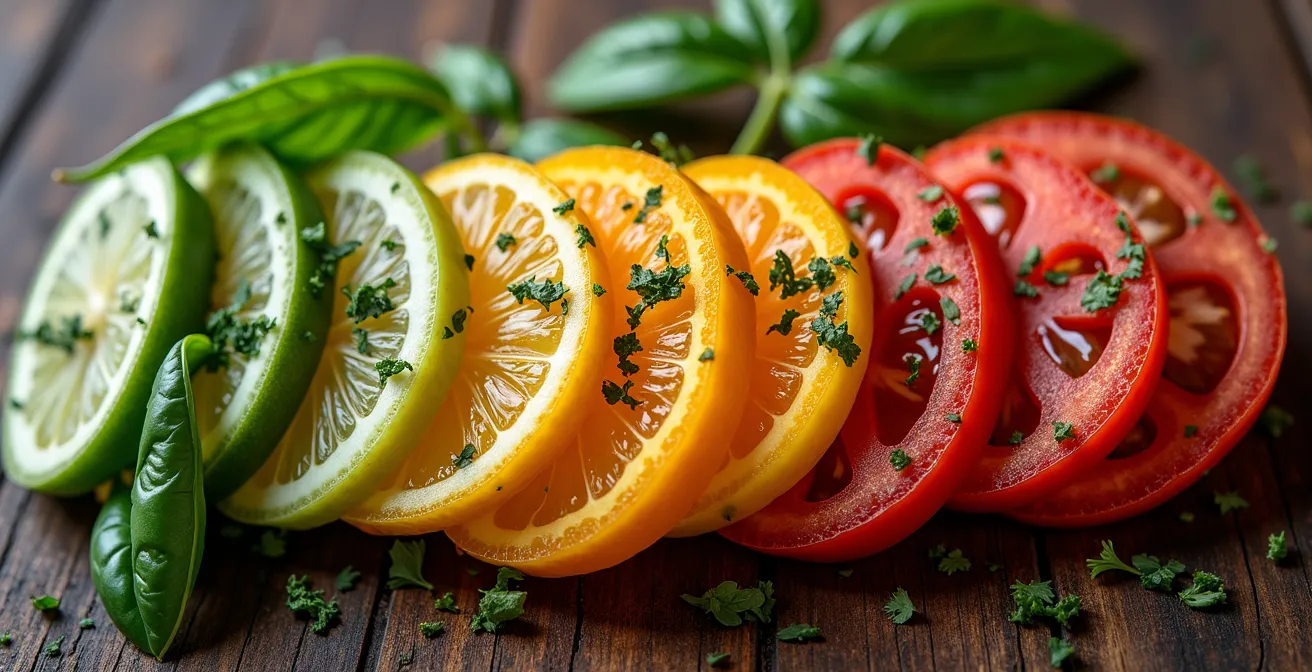
The single most powerful tool for ordering an exceptional meal is not a review app or a guidebook; it is knowledge of the local harvest calendar. The “chef’s special” or “plat du jour” is not a marketing gimmick to offload aging inventory. In any respectable establishment, it is a direct reflection of what was best at the market that very morning. This is where the culinary ecosystem truly comes full circle: the market’s peak offerings dictate the day’s most vibrant dishes. To ignore the seasonal calendar is to willfully choose a less flavorful, less authentic experience.
Seasonality is the organizing principle of all great cuisines. Before global shipping created a world of perpetual strawberries, a culture’s entire culinary rhythm was dictated by the seasons. Ordering asparagus in autumn or tomatoes in spring is a cardinal sin for any palate-focused diner. It signals a disregard for the very essence of flavor, which is intrinsically tied to an ingredient’s peak moment.
Restaurants that are deeply connected to their local farms and markets leverage this rhythm to their advantage, offering dishes that capture a fleeting moment of peak freshness. This connection is a hallmark of authenticity and quality.
Case Study: The ‘Plat du Jour’ as a Seasonal Strategy
The logic of seasonality is backed by hard data. According to the USDA, the demand for freshness is so high that 77% of farmers market vendors expanded their product diversity to meet it. Critically, 40% of these vendors sell cosmetically “imperfect” products that are rejected by mainstream supermarkets but prized by chefs for their superior flavor. Restaurants that source from these vendors build their daily specials—the ‘plat du jour’—around this morning-fresh availability. This makes the daily special, by definition, the most authentic and often the best-tasting item on the menu, a direct line to the region’s current harvest.
Why Reading About a Site’s History Beforehand Doubles Your Appreciation?
Eating is never just about flavor; it is about context. A dish is a story, and to truly appreciate it, you need to understand its plot. Reading about a region’s history before you arrive is as crucial as packing your passport. It transforms you from a passive consumer into an active participant in the culture, allowing you to recognize historical layers in every bite. Understanding a city’s trade routes, colonial past, and immigration waves allows you to predict and identify the influences on its menu. Suddenly, the cinnamon in a savory dish is not a random choice, but a ghost of the spice trade; the tomato in Italian food is a reminder of the Columbian Exchange.
This historical context is also your sharpest weapon against inauthenticity. Tourist traps thrive on selling a simplified, often fictionalized, version of a culture’s cuisine. They flatten complex histories into easily marketable clichés. A diner armed with historical knowledge can immediately spot these fabrications. They know which dishes are genuinely traditional and which are modern inventions for the tourist trade. This knowledge protects both your wallet and your palate.
As one travel expert astutely notes, the economic model of a tourist trap is fundamentally different from that of a local institution.
Tourist traps charge more because they can. Because you’re new. Because they don’t expect you to come back. Local restaurants want your return.
– Travel Expert, Duffel Bag Spouse Travel Guide
Your pre-trip research is an investment in earning that “return customer” respect, even on your first visit. It shows you’ve done the work and are there to appreciate the real story.
- Research key ingredients: Study the history of foundational ingredients (like the chili pepper in Thai cuisine or the potato in Irish food) to understand their cultural impact.
- Study trade and immigration: A city’s history as a port or a hub for immigrants is written on its menus. Map these influences to predict fusion elements.
- Read old cookbooks: Digital archives of old regional cookbooks are treasure troves for identifying genuinely traditional dishes versus modern interpretations.
- Connect festivals to harvests: Align your visit with religious or seasonal festivals to taste dishes that are only prepared at specific times of the year, representing the deepest level of tradition.
Why Eating 30g of Protein at Breakfast Stops Nighttime Snacking?
Our exploration of a city’s culinary ecosystem must also include its human element—the bio-cultural rhythms that govern daily life. How a culture structures its meals, particularly its first meal of the day, is a profound insight into its work patterns, energy needs, and dietary philosophy. The modern Western notion of a sugary, carb-heavy breakfast is a recent anomaly. In many cultures, breakfast is a savory, protein-centric affair designed to provide sustained energy for a day of physical labor, a practice science now confirms is optimal for metabolic health.
Consuming at least 30g of protein at breakfast has been shown to increase satiety, stabilize blood sugar, and significantly reduce cravings for high-fat, high-sugar snacks later in the evening. This isn’t a new diet fad; it is ancient wisdom encoded in traditional breakfast foods around the world. The Turkish breakfast of eggs, cheese, and olives, or the Japanese breakfast of grilled fish, rice, and miso soup, are not random collections of food. They are sophisticated nutritional strategies honed over centuries to fuel a populace.
For the traveler, this presents a golden opportunity. Seeking out a traditional, protein-rich breakfast is a direct path to an authentic culinary experience, far from the standardized hotel buffet.
Case Study: Breakfast as a Window to Culture
Food expert Mark Wiens’ extensive documentation of global breakfast traditions highlights this connection perfectly. His explorations show that protein-rich, savory breakfasts in cultures from Turkey to Japan are a direct reflection of traditional workday patterns and dietary philosophies. He consistently finds that the most authentic and delicious versions of these meals are served at humble, local spots near markets and transit hubs, typically peaking between 6 and 8 AM. This is when locals are fueling up for their day, and it provides the purest culinary experience, completely free from tourist influence and the bland standardization of international hotels.
Key Takeaways
- Stop spotting traps, start decoding systems: The most authentic food is found by understanding a city’s entire culinary ecosystem, not just by avoiding bad restaurants.
- Seasonality is the ultimate truth serum: A menu that aligns with the local harvest calendar is your most reliable guide to flavor and authenticity.
- Food is history on a plate: Researching a region’s trade, agriculture, and immigration history before you go unlocks a deeper appreciation of its cuisine.
How to Adjust Your Macronutrient Ratio to Eliminate the Afternoon Energy Crash?
The dreaded 4 PM energy crash is often blamed on a lack of sleep or the stresses of travel. More often than not, the culprit is on your lunch plate. A lunch high in refined carbohydrates and low in protein and healthy fats leads to a rapid spike and subsequent crash in blood sugar, leaving you lethargic and unproductive. Many cultures, particularly in warmer climates, have intuitively solved this problem for centuries through their meal structures and bio-cultural rhythms. They haven’t “adjusted their macronutrient ratios” in a clinical sense; they have perfected a way of life that naturally supports sustained energy.
The traditional Mediterranean lunch, for example, is often the largest meal of the day, rich in vegetables, healthy fats from olive oil, and a moderate portion of protein. This is followed by a “siesta” or a period of rest during the hottest part of the day. This structure is not a sign of laziness; it is a highly intelligent bio-cultural adaptation. It allows for proper digestion of a large, nutrient-dense meal and naturally circumvents the afternoon slump, leading to a more productive late afternoon and evening.
As a traveler, you can adopt this wisdom. Instead of a quick, carb-heavy sandwich on the go, opt for a more substantial, seated lunch that balances protein, fats, and complex carbohydrates. Prioritize dishes with grilled fish, legumes, and plenty of fresh vegetables. This approach not only provides a more authentic and leisurely dining experience but also sets you up for an energy-filled afternoon of exploration, free from the need for a caffeine and sugar fix.

By aligning your own eating patterns with the traditional rhythm of the place you are visiting, you do more than just eat well—you inhabit the culture on a deeper, more physiological level. It is the final and most profound step in learning to eat like a local.
Now that you are equipped with the critical lens to decode a city’s food culture, the next step is to put this knowledge into practice. Your next trip is not just a vacation; it is a field research opportunity to sharpen your palate and deepen your understanding of the world, one authentic meal at a time.