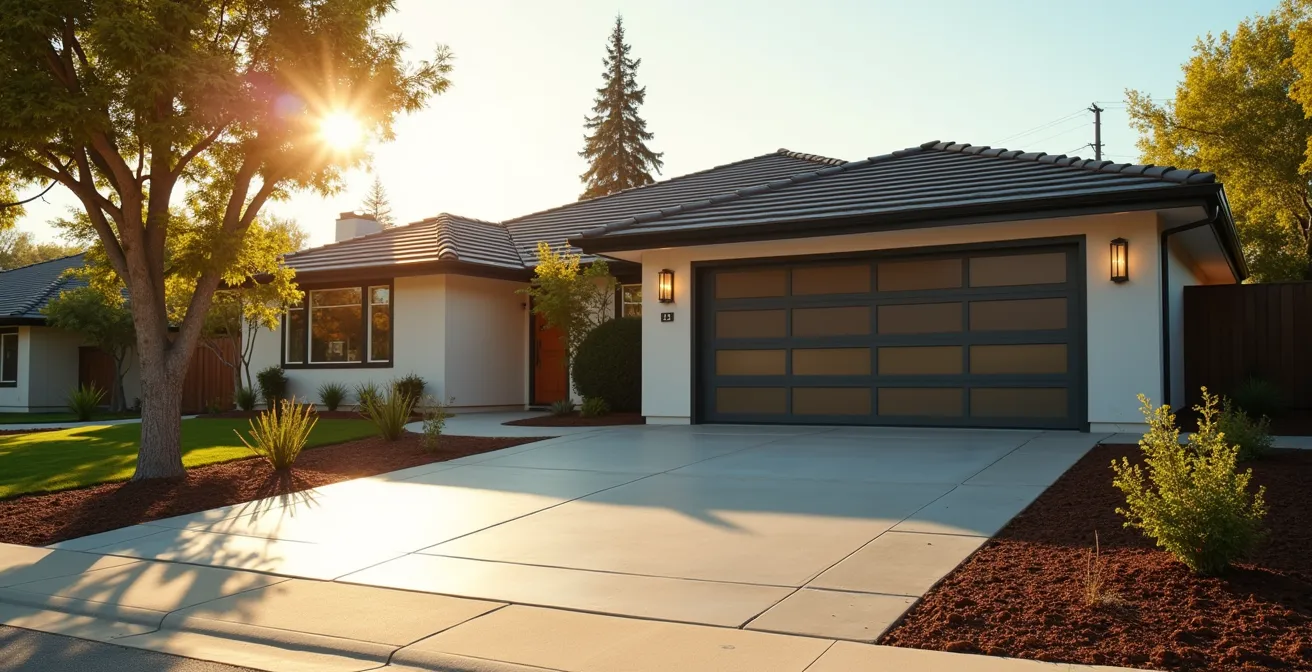
The fastest path to profit isn’t a kitchen gut-reno, but a series of precise, high-velocity upgrades engineered for speed and buyer impact.
- Bathroom additions offer superior ROI and significantly shorter project timelines compared to major kitchen renovations.
- Aggressive scheduling through parallel work and 100% material pre-ordering is non-negotiable for compressing holding costs.
- In a down market, a “surgical gut” and cosmetic refreshes deliver higher returns than expensive, full-gut renovations.
Recommendation: Focus on becoming the best-presented house at a key price point by prioritizing upgrades that maximize perceived value and minimize project duration.
In the world of house flipping, time is money. Every day you hold a property, carrying costs—mortgage, taxes, insurance, utilities—are eating into your profit margin. The market can shift, a deal can go sideways, and your capital is tied up. The common wisdom tells you to focus on kitchens and bathrooms, the so-called “money-making” rooms. But this advice is dangerously incomplete. It ignores the most critical variable for a sub-six-month flip: timeline compression.
Simply choosing a high-ROI upgrade on paper is a rookie mistake. A major kitchen renovation might promise an 80% return, but if it takes 12 weeks, it could be a net loss compared to a smaller project that finishes in three. The real question isn’t just “What yields the highest ROI?” It’s “What yields the highest ROI in the shortest possible time, with the least amount of friction?” The 70% rule—paying no more than 70% of the After Repair Value (ARV) minus repairs—only works if your repair timeline and budget are ruthlessly controlled.
But what if the key to a profitable, fast flip wasn’t about spending more on the “right” rooms, but about a surgical approach to value creation? This playbook moves beyond generic advice. We’ll dissect the data-backed upgrades that deliver maximum impact, the scheduling strategies to execute them at lightning speed, and the cost-control tactics that protect your bottom line. We will focus on value velocity—how quickly you can inject perceivable value and get the property back on the market. This is about making smart, targeted decisions that prioritize a fast, profitable exit.
For those who prefer a more dynamic format, the following video offers a classic take on commitment and follow-through, principles every successful flipper understands.
This article breaks down the essential, ROI-focused strategies you need to master for sub-six-month flips. The following sections provide a clear roadmap, from choosing the right projects to executing them with maximum efficiency and avoiding common pitfalls.
Summary: A Flipper’s Guide to High-Velocity ROI
- Why Adding a Second Bathroom Increases Resale Value More Than a Kitchen Reno?
- How to Schedule Contractors to Finish a Reno Project 2 Weeks Early?
- Cosmetic Refresh vs Full Gut: Which Strategy Maximizes Profit in a Down Market?
- The Permit Mistake That Can Stall Your Project for 3 Months
- How to Cut Material Costs by 15% Without Compromising Finish Quality?
- The “Lipstick on a Pig” Signs That Reveal a Poor Quality Flip
- Retrofit Kits vs New Machines: Which Path Offers Faster Payback?
- Why Ignoring Curb Appeal Can Drop Your Final Sale Price by Up to 10%?
Why Adding a Second Bathroom Increases Resale Value More Than a Kitchen Reno?
Forget what you’ve heard. While a stunning kitchen is a great selling feature, it’s a slow, capital-intensive beast. For a fast flip, adding a bathroom—especially a second one to a single-bath home—is the undisputed champion of ROI velocity. The logic is simple: you’re solving a fundamental lifestyle problem for buyers. Going from one bathroom to two is a functional quantum leap that buyers will pay a premium for, whereas a “nicer” kitchen is a subjective upgrade. The data confirms that for quick returns, you’re better off adding a bath than a bedroom, as HGTV’s analysis reveals that bathroom additions provide twice the resale value.
The timeline is the real differentiator. A bathroom addition can often be completed in 3-4 weeks, while a full kitchen gut can easily stretch to 8-12 weeks, tying up your capital and exposing you to market risk. The key is to find the space. Look for oversized closets, unused space under stairs, or a section of a large laundry room that can be converted into a powder room or a full second bath. This strategy delivers maximum impact for a relatively contained investment.
Case Study: The Baltimore Bathroom ROI Explosion
The power of a strategic bathroom remodel is not just theoretical. In Baltimore’s competitive housing market, a targeted project demonstrated this principle perfectly. According to Remodeling Magazine, a flipper invested just $9,400 into a mid-range bathroom remodel. The result? The project recouped an incredible 182% of its cost at resale. This wasn’t a luxury overhaul, but a smart, functional upgrade that directly addressed a market need, proving that a well-executed, smaller project can deliver exceptional returns, especially when speed is a factor.
By focusing on a bathroom addition, you’re not just adding a feature; you’re changing the entire dynamic of the house, making it viable for a larger pool of buyers (like families) and commanding a higher price, all within a compressed timeline.
How to Schedule Contractors to Finish a Reno Project 2 Weeks Early?
Your profit on a flip is inversely proportional to your holding time. With the average hold time for U.S. home flips in 2023 was 169 days, every day you can shave off the schedule is pure profit. The secret to finishing early isn’t cracking a whip; it’s ruthless pre-planning and parallel-path scheduling. The traditional, linear approach (demo -> framing -> plumbing -> electrical -> drywall) is a profit killer. Your goal is to have multiple trades working simultaneously on non-dependent tasks.
This requires a radical shift in mindset. Before one hammer swings, 100% of your materials should be on-site. This eliminates the single biggest cause of delays: waiting for an order. Second, hold a “pre-mortem” meeting with your plumber, electrician, and HVAC tech *before* demo. Map out every dependency on a shared calendar. The plumber can be roughing in the new bathroom while the electrician is running new lines in the kitchen and a painter is prepping bedrooms. This synchronized dance is the essence of timeline compression.
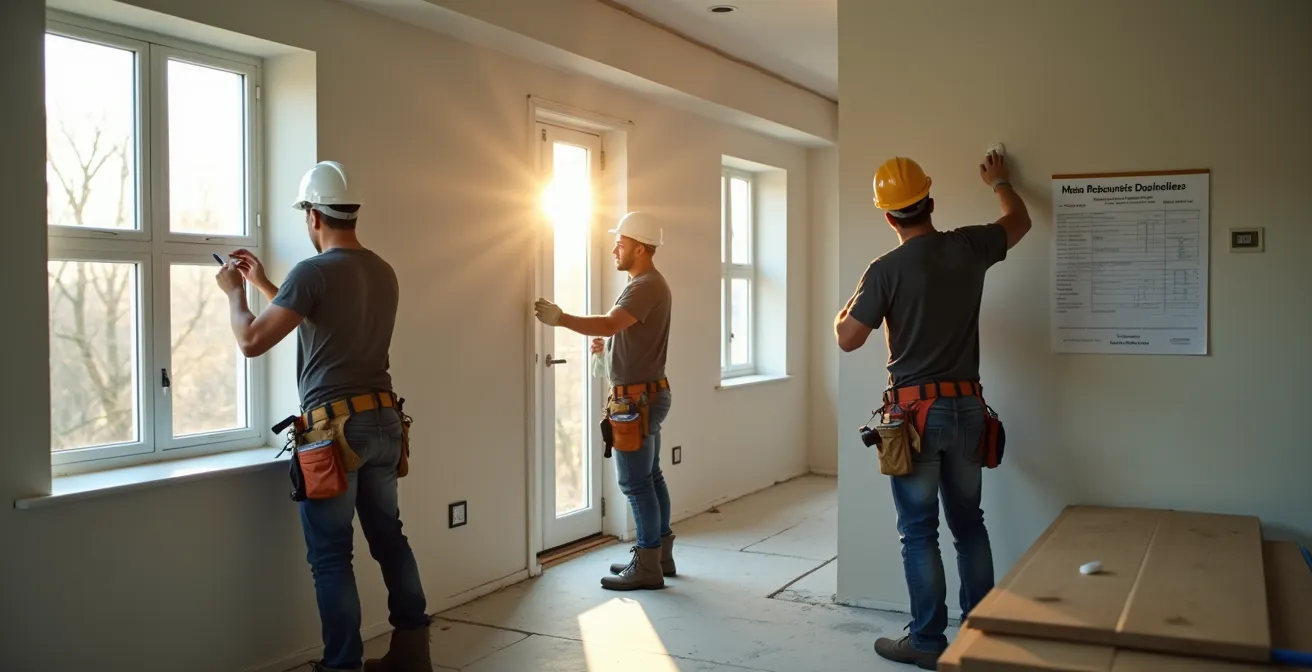
As the image illustrates, an efficient job site is a busy one, with multiple specialized tasks happening in parallel. Establish clear communication protocols—a group chat, a daily 10-minute stand-up—to resolve conflicts before they become delays. Mandate a 15-minute cleanup from every trade at the end of their day. It keeps the site safe and efficient, preventing one trade from blocking another. This level of coordination feels like overkill, but it’s what separates amateur flippers from professionals who consistently close projects weeks ahead of schedule.
Cosmetic Refresh vs Full Gut: Which Strategy Maximizes Profit in a Down Market?
In a hot seller’s market, you can get away with a full gut renovation. Buyers are plentiful and willing to pay top dollar. But in a flat or down market, a full gut is a recipe for disaster. You risk over-improving for the neighborhood and pricing yourself out of the market. In these conditions, the winning strategy is a surgical cosmetic refresh. Your goal isn’t to be the most expensive house on the block; it’s to be the best-presented house at a compelling price point.
This means focusing on high-impact, low-cost upgrades. Think fresh, neutral paint throughout; new, modern hardware on all cabinets and doors; updated light fixtures; and refinishing existing hardwood floors instead of replacing them. This isn’t about being cheap; it’s about smart capital allocation. You’re creating powerful “perception arbitrage”—making the property *feel* new and high-end without the cost of a full gut. One of the worst things to fix when flipping is a flawed floor plan that requires extensive, expensive changes. Instead, a “surgical gut” might involve removing a single non-load-bearing wall to create an open-concept living area, dramatically improving flow for a fraction of the cost of a full renovation.
The following table breaks down the ROI dynamics. Notice how high-cost projects have diminishing returns, especially when market conditions are not optimal.
| Renovation Type | Average Cost | Average ROI | Best Market Condition |
|---|---|---|---|
| Cosmetic Refresh (Paint/Hardware) | $5,000-$15,000 | 75-100% | Down Market |
| Minor Kitchen Remodel | $15,273 | 80-100%+ | Any Market |
| Major Kitchen Remodel | $77,939 | 41.8% | Hot Market Only |
| Garage Door Replacement | $4,513 | 193.9% | Any Market |
| Full Gut Renovation | $100,000+ | Variable | Luxury/Hot Market |
In a down market, a $78,000 kitchen remodel that only returns 42% is a catastrophic loss. A $10,000 cosmetic refresh that returns 90% while getting the house sold in 30 days is a massive win.
The Permit Mistake That Can Stall Your Project for 3 Months
Nothing kills timeline compression and bleeds profit like a Stop Work Order. The single most devastating, unforced error a flipper can make is misunderstanding or ignoring building permits. Thinking you can “ask for forgiveness later” is a fantasy that will get your project shut down for weeks, or even months, while you navigate a bureaucratic nightmare of fines, inspections, and retroactive approvals.
The danger often lies in “scope creep.” Your plan might be a cosmetic refresh that doesn’t require permits. But then you decide to move a sink, which involves plumbing. Or you open a wall and discover faulty wiring that needs to be replaced. Suddenly, your non-permitted project has strayed into permit territory. You must understand your local municipality’s distinction between “repair” (usually no permit needed) and “replace” (often requires a permit). Before you even make an offer on a property, a crucial due diligence step is to check city records for unpermitted work done by previous owners. Inheriting their problem makes it your problem, and it will surface during the buyer’s inspection.
As this scene suggests, all progress stops when regulators step in. For any project involving structural, plumbing, electrical, or HVAC changes, budget for permits (typically $500-$2,000) and the time it takes to get them. For complex projects, hiring a permit expediter can be a smart investment, often cutting approval times by 30-50%. It’s an upfront cost that buys you insurance against a multi-month, profit-destroying delay.
How to Cut Material Costs by 15% Without Compromising Finish Quality?
Hard costs for materials are a huge chunk of your budget. While some flippers turn to DIY to reduce labor expenses—and indeed, DIY projects can save up to 20-30% on renovation costs—this only works if you have the time and skill. A more scalable strategy for any flipper is to attack the material costs directly through smart sourcing. You can easily trim 15% or more off your material budget without ever choosing a lower-grade finish.
This is about building relationships and knowing where to look. Start with your suppliers. Ask them about overstocked or discontinued materials. You can often get high-quality tile, flooring, or fixtures for a fraction of the price. For appliances, always check the “scratch and dent” section. A minor, often hidden, cosmetic flaw can save you hundreds of dollars on a stainless steel appliance package. For countertops and carpet, seek out remnant yards. They sell the leftover pieces from larger jobs for 50-70% off—perfect for the smaller kitchens and bathrooms typical in flips.
Develop a standard “flip palette.” Instead of choosing new materials for every project, standardize on 1-2 options for paint color, LVP flooring, tile, and countertops that you know are cost-effective and have broad buyer appeal. This allows you to negotiate bulk purchasing agreements with your vendors. The more you can systematize your material choices, the more leverage you have. Get to know the Pro Desk associates at your local big-box stores. They can give you a heads-up on upcoming sales and help you find deals on things as simple as ripped bags of mulch for landscaping, which still provide the same high-impact curb appeal.
The “Lipstick on a Pig” Signs That Reveal a Poor Quality Flip
As an investor, you need to be able to spot a poorly executed flip—both to avoid buying one and to ensure your own projects don’t carry the same telltale signs. A “lipstick on a pig” flip is one where an amateur investor has thrown cheap cosmetic fixes over top of serious, underlying issues. These properties are a minefield for the next buyer and a lesson in what not to do.
The red flags are often in the details that lazy flippers miss. Paint on switch plates, hinges, or window hardware is a dead giveaway of rushed prep work. Mismatched material quality, like expensive quartz countertops paired with a cheap, flimsy faucet, shows a focus on buzzwords over substance. One of the most revealing checks is the “floating floor test.” When walking on a new LVP or laminate floor, press down firmly on the seams. Any sponginess, bouncing, or clicking is a sign that the flipper didn’t properly level the subfloor underneath—a costly fix that they simply covered up. A quality flip feels solid and consistent from top to bottom.
Cabinetry is another hotspot for corner-cutting. Open and close all doors and drawers. Are they aligned? Do they operate smoothly? Cheap cabinets will often be misaligned and use flimsy hardware. Look beyond the shiny new surfaces and inspect the core systems. Check the manufacturing dates on the HVAC and water heater. If they’re over 15 years old, they are a major liability the flipper chose to ignore. A quality flip addresses the bones of the house, not just the skin.
Your 5-Point ‘Lipstick on a Pig’ Audit
- Core Systems Check: Before anything else, inspect the electrical panel for new, properly labeled breakers and check the manufacturing dates on the HVAC and water heater units. Old systems are a major red flag.
- Subfloor & Structure Test: Perform the “floating floor test.” Walk the entire property, pressing firmly on floor seams. Any sponginess or noise indicates an unlevel subfloor that was covered, not fixed.
- Finish Quality Inspection: Examine the details. Look for paint overspray on switch plates, hinges, and window hardware. This reveals lazy prep work and a rushed job.
- Material Consistency Audit: Assess the balance of materials. Are expensive quartz countertops paired with a cheap, lightweight faucet? This “misplaced priority” is a classic sign of an amateur flip focused on buzzwords.
- Operational Flow Test: Open every door and drawer. Check for smooth operation and proper alignment. Misaligned cabinet doors and sticky drawers point to cheap materials and poor installation.
Retrofit Kits vs New Machines: Which Path Offers Faster Payback?
Appliances are a critical component of the finished product, but they can quickly bloat a budget. While the according to Angi.com, the average U.S. home renovation costs around $51,578, a significant portion can be eaten up by appliances if you’re not strategic. The decision isn’t simply “new vs. old.” It’s a calculated choice between replacing, retrofitting, or retaining existing appliances to maximize perceived value for the lowest cost.
The number one rule is suite consistency. A kitchen with a stainless steel fridge, a white dishwasher, and a black stove looks chaotic and cheap. Mismatched appliances scream “incomplete” to a buyer. In almost every case, it is better to have a full suite of mid-range, matching appliances than a single high-end appliance paired with older units. If you have a kitchen with functional but dated or mismatched appliances, your best bet is to replace the entire set with a new, cost-effective stainless steel suite. The perceived value boost of a cohesive set is enormous.
However, if the existing appliances are stainless steel, functional, and under 5 years old, replacing them is burning money. A professional deep clean is all that’s needed. For high-end appliances that are 5-10 years old but have a dated look, a professional retrofit kit can be a smart middle ground. These kits can update panels and hardware for a fraction of the cost of a new Sub-Zero or Wolf appliance, preserving the brand cachet without the capital outlay. This decision matrix helps clarify the most profitable path.
| Appliance Condition | Age | Recommended Action | ROI Impact |
|---|---|---|---|
| Working, Stainless Steel | <5 years | Deep clean or cosmetic retrofit | High (minimal cost) |
| Working, Outdated Finish | >10 years | Replace with mid-range new | High (buyer appeal) |
| Non-matching Suite | Mixed | Replace all for suite consistency | Very High (perceived value) |
| High-end but Dated | 5-10 years | Professional retrofit kit | Moderate |
Key Takeaways
- For speed and ROI, a second bathroom addition almost always beats a major kitchen renovation, solving a core functional need for buyers.
- Aggressive, parallel-path scheduling, enabled by ordering 100% of materials before demolition, is the most powerful tool for compressing your timeline and increasing profit.
- In flat or down markets, a surgical cosmetic approach focusing on high-impact, low-cost upgrades provides a much higher and safer return than a full gut renovation.
Why Ignoring Curb Appeal Can Drop Your Final Sale Price by Up to 10%?
You can have the most beautifully renovated interior in the world, but if the buyer’s first impression is a peeling front door, an overgrown lawn, and dated exterior lighting, you’ve already lost. Curb appeal isn’t just a nice-to-have; it’s the marketing for your entire project. It sets the tone for the showing and can directly impact the offer price. Many flippers exhaust their budget on the interior and neglect the exterior, a mistake that can easily shave 5-10% off the final sale price.
The good news is that creating powerful curb appeal doesn’t have to be expensive. It’s the ultimate area for “perception arbitrage.” A few hundred dollars spent on the exterior can create thousands of dollars in perceived value. Start with the front door. A fresh coat of a bold, stylish paint color ($50) and new, modern house numbers ($50) can completely transform the entrance. Upgrading exterior light fixtures ($300) and installing a video doorbell ($200) signals to buyers that the home is modern, safe, and well-maintained. Don’t underestimate the power of landscaping: fresh mulch in all the beds, a few well-placed architectural plants, and a power-washed driveway create a crisp, clean look that makes the entire property feel premium.

Some of the highest ROI projects in all of flipping are curb appeal-focused. For example, a new garage door replacement delivers an impressive 193.9% ROI, fundamentally changing the look of the house for a relatively low cost. You must allocate at least 5-10% of your renovation budget specifically to the exterior. It’s the final polish that ensures all your hard work on the inside is seen in the best possible light and commands the highest possible offer.
Stop leaving money on the table. Use this playbook to analyze your next deal not just on potential ARV, but on its potential for timeline compression and high-velocity profit. Execute with precision, control your costs, and get your capital back to work faster.