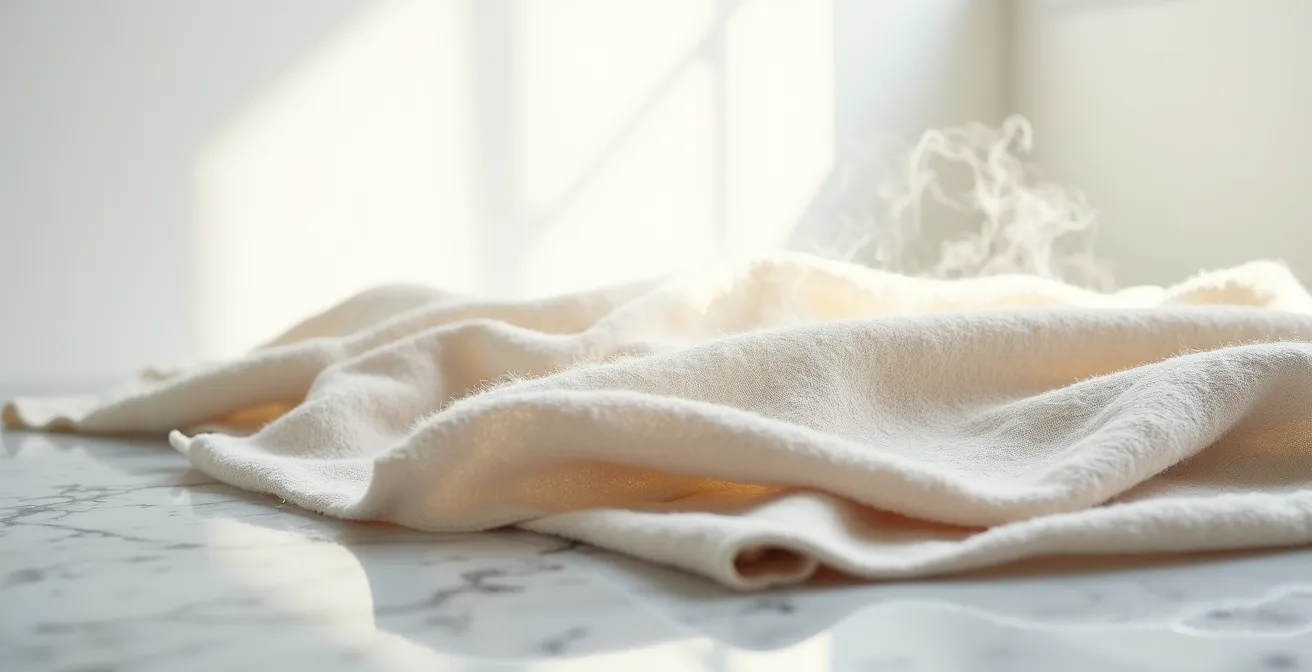
Performance fabrics often fail in humidity because “moisture-wicking” is only half the story; true comfort comes from managing invisible water vapor, not just liquid sweat.
- Genuine breathability, or Moisture Vapor Transmission Rate (MVTR), is the key metric for comfort in humid conditions, allowing sweat vapor to escape before it condenses.
- Hygroscopic fibers like wool, Tencel, and hemp absorb moisture vapor directly, vastly outperforming simple hydrophobic synthetics like polyester that only push liquid sweat around.
Recommendation: To find true comfort, learn to assess a fabric’s fiber type (hygroscopic vs. hydrophobic) and physical structure (weave, loft), rather than relying on marketing claims.
The feeling is all too familiar for anyone living in a hot, humid climate: you put on a “high-performance, sweat-wicking” shirt, and within minutes, you feel like you’re wrapped in plastic. The fabric gets damp, clammy, and sticks to your skin, making you feel hotter and more uncomfortable than before. This common frustration stems from a fundamental misunderstanding, fueled by marketing, about what “breathability” truly means. The standard advice to simply choose polyester or other synthetic wicking fabrics often ignores the real enemy in high humidity: water vapor.
Most performance wear is designed to manage liquid sweat through a process called wicking. This is effective in dry climates where sweat can evaporate quickly. In a humid environment, however, the air is already saturated with moisture, severely limiting evaporation. The real challenge isn’t just moving liquid sweat; it’s allowing the invisible water vapor your body constantly releases to pass through the fabric before it even has a chance to condense into sweat. This is the realm of textile engineering, where the physics of fibers and the geometry of a weave determine true comfort.
But what if the key to staying comfortable wasn’t just about wicking, but about understanding the molecular behavior of different fibers? This guide moves beyond the marketing hype to give you the practical knowledge of a textile engineer. We will dissect the science behind why some fabrics feel cool and airy while others become a swampy mess. By understanding the principles of moisture vapor transmission, hygroscopic absorption, and fabric structure, you can finally make informed choices and select apparel that genuinely performs in high humidity.
This article will deconstruct the properties of common and advanced textiles, providing a scientific basis for your next apparel purchase. We will explore everything from the odor-causing properties of synthetics to the surprising strength of natural fibers and the benefits of chemical-free certifications.
Summary: A Scientific Guide to Performance Fabrics for Humidity
- Why Polyester Wicks Sweat but Smells Worse Than Wool?
- Lab-Grown Leather vs Plant-Based Leather: Which Is Truly Durable?
- How Phase-Change Materials Keep You Warm Without Bulk?
- The Laundry Mistake That Shrinks Rayon and How to Reverse It?
- How to Perform the “Rub Test” to Predict Pilling in Store?
- Why Adding Natural Textures to Your Decor Reduces Daily Stress?
- Hemp vs Cotton: Which Plant Uses Less Water per T-Shirt?
- Why Switching to GOTS-Certified Cotton Can Resolve Unexplained Skin Rashes?
Why Polyester Wicks Sweat but Smells Worse Than Wool?
The primary reason polyester is championed as a performance fabric is its hydrophobic nature; its fibers repel water. When you sweat, polyester doesn’t absorb the moisture but instead pushes it across the fabric’s surface, a process known as wicking. While this sounds effective, it creates a significant problem with odor. The lipids and proteins in your sweat are spread across a non-absorbent surface, creating an ideal feeding ground for odor-causing bacteria. Since the fiber itself doesn’t hold any moisture, the bacteria thrive on the surface, leading to a rapid and noticeable smell.
In stark contrast, wool is a hygroscopic fiber, meaning it readily attracts and absorbs water vapor at a molecular level. As Woolmark research highlights, wool fibers can absorb up to 30 times as much water vapor as polyester. This unique ability allows wool to manage moisture *before* it even condenses into liquid sweat, keeping the skin’s microclimate drier. Furthermore, by locking moisture vapor away within the fiber’s core, wool leaves its surface much less hospitable for bacteria to grow. This significantly reduces odor buildup, even after intense activity.
The difference is not just anecdotal. A scientific study systematically evaluated various apparel fabrics after exercise sessions. The findings were clear: odor intensity was strongly associated with fiber type. An apparel study found that polyester fabrics consistently rated high in odor intensity, while natural fibers like wool and cotton scored in the mid-to-low range. This confirms that while polyester wicks liquid, wool manages the entire moisture ecosystem far more effectively, resulting in superior odor control.
Lab-Grown Leather vs Plant-Based Leather: Which Is Truly Durable?
When evaluating alternatives to traditional animal leather, consumers often focus on sustainability, but durability and comfort—especially in humidity—are critical engineering factors. The key difference lies in the material’s microstructure, specifically its porosity. Traditional leather has a complex, fibrous collagen structure with natural pores that allow moisture vapor to pass through, making it breathable.
Many “plant-based” leathers are fundamentally different. They are typically composite materials, consisting of a textile base (like cotton or polyester) coated with a layer of polyurethane (PU) or polyvinyl chloride (PVC). While fillers like cactus or pineapple leaf fibers may be included, the surface is often a solid sheet of plastic. This non-porous surface layer traps moisture vapor, creating a clammy, uncomfortable feeling against the skin, similar to wearing a plastic bag. Their durability is also tied to this coating; once the plastic layer cracks or peels, the material fails.
This is where engineered materials like lab-grown or mycelium-based leathers offer a significant advantage. These materials are not simply coated textiles; they are grown from cells or fungal roots (mycelium) into a structure that can be engineered to mimic the porous, fibrous network of real leather. This allows for the creation of a material with a controlled Moisture Vapor Transmission Rate (MVTR), providing both durability and genuine breathability.
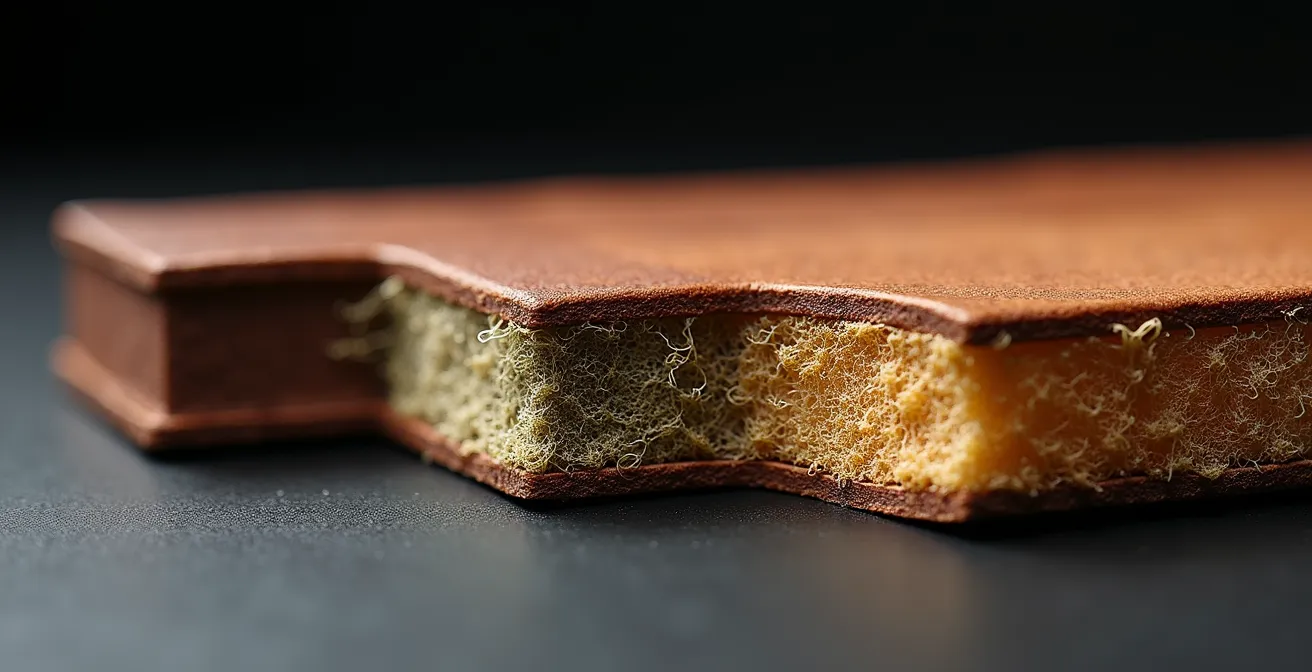
As the microscopic view shows, the internal architecture dictates performance. The solid, uniform layer of typical plant-based synthetics blocks airflow, whereas the engineered, interconnected structure of advanced bio-fabricated materials allows for the passage of air and moisture, leading to superior comfort and a more robust form of durability that isn’t just skin-deep.
How Phase-Change Materials Keep You Warm Without Bulk?
Phase-Change Materials (PCMs) represent a significant leap in smart textile technology, offering thermal regulation without the need for bulky insulation. They function like microscopic thermal batteries embedded directly into a fabric. These “batteries” are typically microcapsules containing a specialized paraffin wax that is engineered to melt and solidify at a specific temperature, usually close to skin temperature.
The mechanism is based on the physics of latent heat. When your body starts to overheat during activity, the PCM absorbs this excess thermal energy, causing the wax inside the microcapsules to melt from a solid to a liquid. This process absorbs a significant amount of heat without raising the temperature of the fabric itself, creating a cooling sensation. Conversely, when your body or the ambient temperature cools down, the wax begins to solidify, releasing the stored heat back toward your skin to keep you warm. This proactive thermal management can significantly improve comfort and reduce sweating. In fact, one leading technology has demonstrated that PCM in bedding can reduce sweat production by up to 48%.
However, as an engineer, it’s crucial to understand their limitations. PCMs have a finite heat storage capacity; once all the wax has melted, the cooling effect stops until it has a chance to re-solidify. This makes them ideal for activities with fluctuating intensity but less so for continuous, high-exertion efforts.
- Recognize Finite Capacity: Once the PCM fully melts (typically around 80-90°F or 27-32°C), its active cooling effect ceases.
- Allow Recovery Time: The material must cool down below its transition temperature to re-solidify and “recharge” its thermal storage capability.
- Layer Appropriately: PCMs are most effective when placed in a base layer, directly against the skin, to maximize heat exchange.
- Consider Activity Duration: They excel in scenarios with intermittent bursts of activity and rest, rather than prolonged, high-output exercise.
- Monitor Ambient Temperature: Their effectiveness is greatest when the environmental temperature fluctuates around their designed phase-change point.
The Laundry Mistake That Shrinks Rayon and How to Reverse It?
Rayon, including its variants like viscose and modal, is a popular fabric prized for its soft feel and beautiful drape. However, it is notoriously fragile when wet, leading to the common and frustrating experience of shrinkage after washing. The problem lies at the molecular level. Rayon is a “regenerated cellulosic” fiber, meaning it’s derived from natural wood pulp that has been chemically processed. The polymer chains that form the fibers are held together by relatively weak hydrogen bonds.
When rayon gets wet, water molecules penetrate the fibers and break these hydrogen bonds, allowing the cellulose chains to relax and slip. The agitation and heat of a washing machine and dryer cause these relaxed chains to contract and re-bond in a more compact, shrunken state. The fiber’s integrity is significantly compromised in this wet state; in fact, rayon fibers can lose up to 50% of their strength when wet, making them highly susceptible to damage and distortion from wringing or spinning.
Fortunately, it’s often possible to reverse this shrinkage by re-lubricating and gently stretching the fibers back into shape. Hair conditioner, which is designed to smooth and detangle protein (hair) or cellulosic fibers, works remarkably well for this purpose.
Action Plan: The Hair Conditioner Method for Rayon Restoration
- Prepare the Solution: Fill a basin or sink with lukewarm (not hot) water. Add one generous capful of inexpensive hair conditioner and mix until it dissolves.
- Submerge and Soak: Place the shrunken rayon garment in the water, ensuring it’s fully submerged. Gently massage the fabric for about 30 minutes to allow the conditioner to penetrate and lubricate the fibers.
- Remove Excess Water: Drain the basin and carefully press the garment against the side to squeeze out excess water. Do not wring or twist the fabric, as this can cause permanent damage.
- Stretch Gently: Lay the garment flat on a clean, dry towel. Carefully and patiently begin to stretch it back to its original size and shape, working section by section.
- Dry Flat with Tension: Once stretched, you can roll the garment in the dry towel to absorb more moisture. Then, lay it on a fresh, dry towel or a flat drying rack. Use heavy, rust-proof objects (like glass jars) as weights on the corners and hems to hold the shape while it air dries.
How to Perform the “Rub Test” to Predict Pilling in Store?
Pilling—the formation of small, fuzzy balls on a fabric’s surface—is a common sign of wear that can make a new garment look old quickly. It’s caused by the abrasion of short, loose fibers, known as staple fibers, which migrate to the surface and tangle together. While some pilling is inevitable with certain fabrics, you can predict a garment’s propensity to pill before you buy it using a simple “Rub Test.”
The key is to understand the difference between staple fibers and filament fibers. Filament fibers, like silk or synthetic extrusions like polyester and nylon, are long and continuous, making them inherently more resistant to pilling. Staple fibers, found in fabrics like cotton, wool, and many synthetic blends, are short and must be spun into yarn. Looser spins and shorter fiber lengths create more fiber ends that can easily work their way loose.
The Rub Test is a practical, in-store method to assess a fabric’s construction and its likelihood of pilling. It simulates the friction a garment will experience during normal wear in a controlled, accelerated way. By performing this quick assessment, you can make a more informed decision about a garment’s long-term durability and appearance.
- Locate an Inconspicuous Area: Choose a hidden spot on the garment, such as an inside seam, the hem, or under a pocket flap.
- Feel the Yarn Construction: Pinch the fabric between your thumb and forefinger. Try to feel the texture of the yarns. Do they feel smooth and tightly integrated (suggesting filament or a tight spin) or fuzzy and loose (suggesting staple fibers)?
- Rub the Fabric: Gently but firmly rub the fabric against itself in a small circular motion for about 10 to 15 seconds.
- Inspect for Fuzzing: Examine the rubbed area under good light. If you see immediate signs of fuzzing or fibers starting to lift and tangle, this is a strong indicator that the fabric will pill with regular wear.
- Check Weave Tightness: In addition to the rub test, visually inspect the fabric’s weave or knit. A tighter, denser construction will hold the fibers in place more securely and resist pilling better than a loose, lofty one.
Why Adding Natural Textures to Your Decor Reduces Daily Stress?
While often discussed in the context of interior design, the principle that natural textures reduce stress is directly applicable to the “decor” we wear every day: our clothing. In high humidity, the primary source of physical stress is the feeling of damp, sticky fabric clinging to the skin. This is where choosing apparel with natural textures, derived from superior fibers, can provide profound physiological and psychological relief.
The comfort comes from how these fibers interact with moisture on a micro-level. As highlighted by textile experts, the inherent properties of certain fibers play a crucial role. According to a research analysis by Discovery Fabrics, “The inherent softness and superior moisture management of natural fibers like merino, Tencel, and linen reduce the physical stress of sticky, clammy synthetics on skin in humid conditions.” This isn’t just about feel; it’s about performance. These fibers manage moisture vapor, preventing the clammy sensation from ever developing.
The visual and tactile experience of these textures also contributes to comfort. The subtle irregularities in a linen weave or the soft loft of merino wool create microscopic air channels that promote airflow and reduce contact with the skin. This physical separation is a key component of feeling cool and dry.
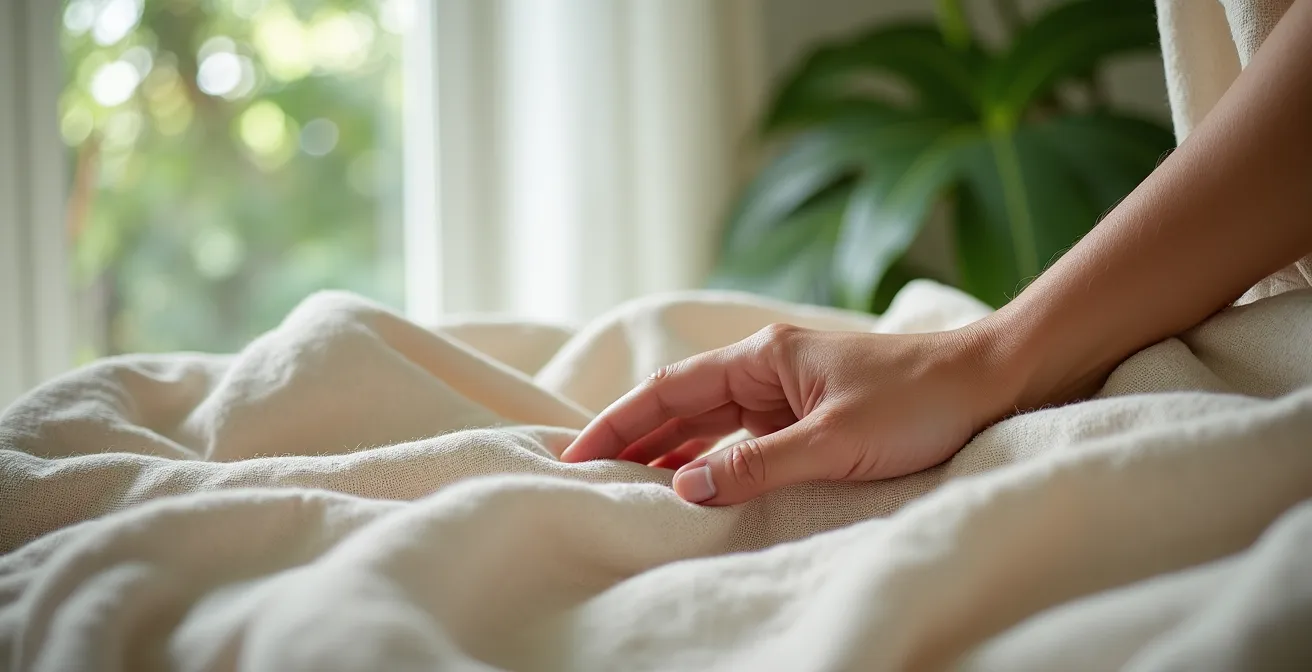
Choosing to “decorate” yourself with these fabrics is a conscious decision to prioritize tactile comfort. The feeling of a crisp, dry linen shirt or a soft, non-itchy merino base layer on a humid day provides a tangible sense of relief. It’s an engineering choice that replaces the physical stress of a poorly performing synthetic with the effortless comfort of a material that works in harmony with your body and the environment.
Hemp vs Cotton: Which Plant Uses Less Water per T-Shirt?
From a sustainability standpoint, the answer is clear: hemp is a far more water-efficient crop than conventional cotton, often requiring less than a third of the water to grow. However, for a consumer in a humid climate, the more critical question is: which one performs better? Here, hemp’s superior engineering gives it a distinct advantage over cotton when conditions get damp.
The primary performance failure of cotton in humidity is its reaction to liquid moisture. Cotton is absorbent, but it has very poor wet strength. When it soaks up sweat, the fibers swell and weaken, causing the garment to become heavy, saggy, and lose its shape. It clings to the skin, blocking airflow and creating a notoriously clammy and uncomfortable feeling. Once wet, it also takes an exceptionally long time to dry, especially when the ambient air is already moist.
Hemp, on the other hand, exhibits a remarkable and counter-intuitive property. It is one of the few natural fibers that actually becomes stronger when wet. This superior wet strength allows a hemp garment to maintain its structural integrity and shape, even as it absorbs moisture. It resists the sagging and stretching that plagues wet cotton, meaning it’s less likely to stick to your skin and will continue to allow for airflow.
Case Study: Hemp’s Superior Wet Strength Performance
Research comparing natural fibers demonstrates their ability to absorb 20-25% of their weight in water while maintaining structural integrity. As a fabric science analysis shows, hemp fibers actually become stronger when damp. This unique characteristic prevents the heavy, saggy appearance and feel that is so common in cotton garments when they are exposed to sweat or high humidity, making hemp a structurally superior choice for performance wear.
This structural advantage, combined with hemp’s natural breathability and antimicrobial properties, makes it a far more resilient and comfortable choice than cotton for active use in humid environments. It provides absorption without the penalty of structural collapse.
Key Takeaways
- Prioritize Moisture Vapor Management: True comfort in humidity comes from hygroscopic fibers (wool, Tencel, hemp) that manage water vapor, not just hydrophobic synthetics (polyester) that only wick liquid sweat.
- Structure Governs Performance: A fabric’s weave, knit density, and porosity are just as critical as its fiber content for determining real-world breathability and comfort.
- Chemicals Kill Breathability: Common finishing agents like formaldehyde resins can clog a fabric’s pores and destroy its natural performance; certifications like GOTS are a proxy for chemical-free, breathable textiles.
Why Switching to GOTS-Certified Cotton Can Resolve Unexplained Skin Rashes?
For many, unexplained skin rashes or irritation are a persistent issue, often blamed on detergents or allergies. However, the cause can frequently be traced back to the invisible chemical finishes applied to conventional textiles, especially cotton. To make fabrics wrinkle-resistant, stain-repellent, or colorfast, manufacturers often treat them with a cocktail of chemicals, with formaldehyde resins being a primary culprit. These resins create cross-links between the cotton fibers to prevent creasing.
The problem is twofold. First, these resins can release small amounts of formaldehyde gas, a known skin irritant and allergen, leading directly to contact dermatitis in sensitive individuals. Second, from a performance perspective, these chemical coatings essentially “pave over” the natural, porous structure of the cotton fibers. This severely impedes the fabric’s ability to absorb and release moisture vapor, drastically reducing its Moisture Vapor Transmission Rate (MVTR). The fabric stops breathing, trapping a layer of humid air and sweat against the skin, which can exacerbate irritation and create a perfect environment for rashes.
This is why switching to GOTS (Global Organic Textile Standard) certified cotton can be a solution. GOTS is not just an organic certification; it is a comprehensive processing standard that strictly prohibits the use of harmful chemicals throughout the entire supply chain. This includes a ban on formaldehyde, heavy metals, and other hazardous inputs. By choosing a GOTS-certified garment, you are ensuring the fabric is free from these irritating chemical finishes. This allows the cotton to retain its natural (albeit limited) breathability and softness, significantly reducing the risk of both chemical and moisture-induced skin irritation.
Empowered with this engineering knowledge, your next step is to critically examine the labels, textures, and certifications of your apparel. Choose fabrics based on scientific principles—like vapor transmission and fiber structure—not just marketing slogans, and you can finally experience true, lasting comfort in any climate.
Frequently Asked Questions About GOTS-Certified Cotton
How does GOTS certification affect fabric breathability?
GOTS prohibits chemical finishes like formaldehyde resins that coat fibers and block moisture absorption, allowing cotton to maintain its natural breathability.
What performance advantage does GOTS-certified wool offer over GOTS cotton?
GOTS wool provides superior moisture vapor management, absorbing 30 times more moisture than synthetic fibers while remaining odor-resistant.
Are there GOTS-certified alternatives to cotton for humidity?
Yes, GOTS-certified Tencel Lyocell offers both clean processing and scientifically superior moisture management compared to cotton.