
Successfully importing artisan furniture requires treating the process as a formal logistical operation, not a simple purchase.
- Authentication and documentation at the source are the primary shields against customs delays and financial loss.
- Professional packing and freight forwarding are non-negotiable investments to protect the item’s physical and monetary value.
Recommendation: Before purchasing, establish a clear “chain of custody” with the artisan and select a customs broker to manage the required paperwork.
The allure of discovering a one-of-a-kind, handcrafted piece of furniture during your travels is undeniable. You envision the unique character it will bring to your home—a story captured in wood, textile, or ceramic. However, the dream can quickly devolve into a bureaucratic nightmare. The gap between the artisan’s workshop and your living room is filled with customs forms, freight logistics, potential damages, and the ever-present risk of counterfeit goods. Many travelers either abandon their find or face unexpected costs and delays upon its arrival.
Standard advice often revolves around “filling out forms correctly” or “declaring everything,” but this fails to address the core issue. The process is opaque, and the financial and sentimental risks are high. But what if the solution was not to simply follow rules, but to adopt the mindset of a logistics professional? The key to avoiding customs nightmares is to establish a series of rigorous logistical checkpoints, transforming an emotional purchase into a structured, risk-managed operation. This guide is not about shopping; it’s about executing a successful international import.
This document will systematically break down the critical control points of this operation. We will cover everything from authenticating the piece at its source to ensuring its physical integrity during transit and satisfying all legal requirements for customs clearance. By understanding the ‘why’ behind each bureaucratic step, you can navigate the system with confidence and ensure your treasured find arrives safely and legally.
Summary: Navigating the Import of High-Value Artisan Goods
- Why Buying Direct from the Workshop Saves the Craft and Your Wallet?
- How to Spot Machine-Made Stitches in “Handmade” Textiles?
- Gallery vs Market Stall: Where to Find the Best Value for Authentic Art?
- The “Aging” Techniques Scammers Use to Fake Antiques
- How to Pack Ceramic Art so It Survives a Transatlantic Flight?
- How to Transfer Customer Data Between EU and US Without Breaking GDPR?
- The Stitching Detail That Reveals a Fake Chanel Jacket instantly
- Why Vintage Haute Couture Is Outperforming the S&P 500 as an Investment Class?
Why Buying Direct from the Workshop Saves the Craft and Your Wallet?
Purchasing furniture directly from an artisan’s workshop is the first and most critical logistical checkpoint. This action accomplishes two primary objectives: it ensures a larger portion of the funds supports the craftsperson directly, preserving their trade, and it establishes the beginning of a verifiable chain of custody for your item. Middlemen and resellers, while convenient, add significant markups and can obscure the item’s true origin, complicating provenance documentation required for customs and future valuation. Dealing with a global furniture import market where the U.S. import value reached $67 billion in 2018, cutting out intermediaries creates significant financial efficiency.
The direct-sourcing model is not merely a cost-saving measure; it is a strategic decision that grants you access to crucial information. You can discuss materials, construction techniques, and the artisan’s history firsthand. This narrative becomes part of the item’s provenance, a key factor in its long-term value. Furthermore, this direct relationship facilitates customisation and provides a clear point of contact for arranging the complex logistics of international shipping.
Case Study: India’s Artisan Furniture Export Success
India’s rise as the world’s 4th largest exporter of wooden furniture exemplifies the viability of the direct-to-buyer model. International buyers are increasingly bypassing traditional retail channels to work directly with workshops in regions known for materials like Sheesham, Mango, and Acacia. These artisans offer handcrafted, customizable designs and often possess FSC certification for sustainable wood sourcing. The established export infrastructure through major ports like Mumbai and Chennai has streamlined the process, making it possible for individual travelers to purchase authentic, high-value pieces at competitive prices and manage their export with greater transparency.
From a customs perspective, a direct purchase simplifies the declaration of value. A detailed invoice from the creator is more authoritative than a cash receipt from a market stall. This initial step lays a solid foundation for all subsequent bureaucratic procedures.
How to Spot Machine-Made Stitches in “Handmade” Textiles?
The principles of authentication apply universally across all handcrafted goods, whether you are examining the stitching on a textile or the joinery of a wooden cabinet. The core task is to identify the subtle, imperfect “tool marks” of the human hand versus the flawless, repetitive patterns of a machine. For textiles, this means looking for slight variations in stitch length, tension, and angle. A machine produces perfectly uniform stitches, whereas even the most skilled artisan will introduce microscopic inconsistencies. These are not flaws; they are signatures of authenticity.
In woodworking, the same principle holds. As noted by a leading expert, the process leaves behind distinct evidence of its creation.
The process of making a piece of furniture using only hand tools leaves behind ‘tool marks.’ Saws leave a mark called a saw kerf while planes leave plane marks, and modern electrical powered saws and planes also leave marks, but theirs are regular and not inconsistent as one sees with hand tools.
– Erik Gronning, Sotheby’s head of Americana
This distinction is crucial for value authentication. A machine-made item posing as handmade is fraud. Your ability to spot these differences is a powerful tool in pre-purchase negotiation and a key checkpoint before committing to the complex process of importation.
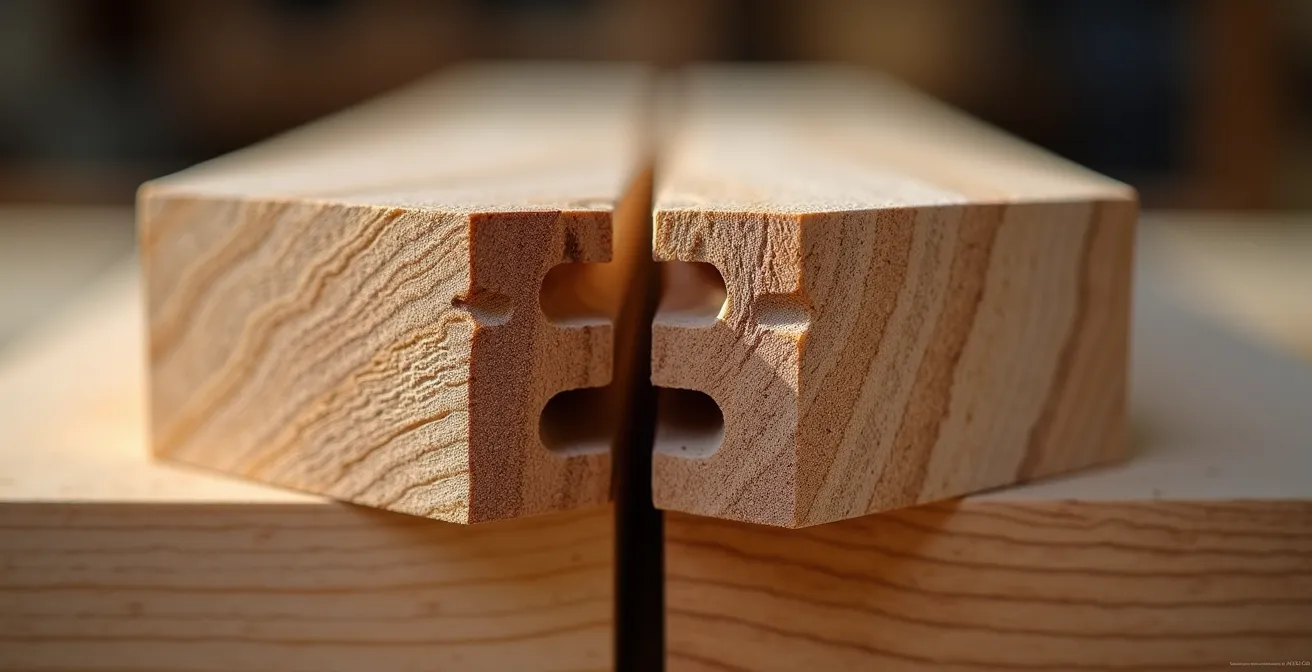
The image above illustrates this concept perfectly. On one side, the irregular, character-filled marks of a hand-chiseled joint; on the other, the cold precision of a CNC machine. Learning to see this difference is fundamental to protecting your investment.
Gallery vs Market Stall: Where to Find the Best Value for Authentic Art?
The sourcing location—a reputable gallery versus a bustling open-air market—represents a critical decision point that dictates risk, cost, and logistical complexity. A gallery purchase typically comes with a higher upfront price, but this cost internalizes several vital services: expert authentication, detailed provenance documentation, and often, professional packing and shipping coordination. A market stall offers the allure of a lower price and a more adventurous buying experience, but it transfers the entire burden of risk and logistics onto you, the buyer. This “lower price” can quickly be eclipsed by the hidden costs of authentication, specialized packing, and navigating customs without proper paperwork.
From a customs broker’s perspective, an item from a gallery is a known quantity. It arrives with a paper trail that satisfies bureaucratic requirements. An item from a market stall is an unknown variable that invites scrutiny. The risk of acquiring a counterfeit is also significantly higher in less formal settings; recent analyses show that even in the broader luxury market, a non-zero percentage of verified items came back as fake or not authentic in 2024, a rate that is likely much higher for unverified market goods.
| Aspect | Gallery Purchase | Market Stall Purchase |
|---|---|---|
| Risk Level | Low (authenticity guaranteed) | High (potential fakes) |
| Price Point | Higher upfront cost | Lower initial price |
| Documentation | Complete provenance provided | Often minimal or absent |
| Logistics Support | Professional handling included | DIY packing required |
| Customs Expertise | Gallery handles paperwork | Buyer responsibility |
| Authentication | Verified by experts | Requires personal expertise |
| Total Value | Higher price but lower total cost | Lower price but hidden costs |
The table above, adapted from an analysis by industry observers, clearly outlines the trade-offs. The choice depends on your risk tolerance and expertise. A gallery purchase is a lower-risk logistical transaction, while a market purchase is a high-risk personal venture.
The “Aging” Techniques Scammers Use to Fake Antiques
A significant risk in sourcing high-value furniture abroad is the prevalence of sophisticated forgeries. Scammers employ a variety of “aging” techniques to make new pieces appear to be valuable antiques. These methods range from applying chemical patinas to simulate age on metal to strategically distressing wood surfaces with chains or ice picks. However, these artificial wear patterns are often illogical. Authentic wear occurs in predictable places: on armrests, around handles, on the front edges of drawers. Random, uniform distressing is a major red flag.
Materials and construction methods are other critical indicators. Anachronisms—the presence of materials or fasteners that did not exist during the piece’s claimed era—are the clearest signs of a fake. For example, the presence of Phillips head screws on a piece purported to be from the 18th century is an immediate giveaway, as they were not invented until the 1930s. Similarly, the internal materials can be revealing.
Plenty of chairs and sofas made today are filled with foam. An 18th-century chair, however, will be filled with horsehair, as foam was not invented until much later in the 20th century.
To systematically protect yourself, a formal authentication checklist is not just helpful; it is a necessary procedural step before any funds are exchanged. This structured approach moves authentication from a vague feeling to a verifiable process.
Action Plan: Your Antique Authentication Checklist
- Weight & Materials: Check if the piece is unusually light. Genuine antiques are often heavier due to denser, older woods and materials like solid iron versus modern aluminum. Research period-appropriate materials.
- Joinery Inspection: Scrutinize connections. Look for hand-cut dovetail joints, mortise-and-tenon construction, or wooden pegs. The presence of modern screws or staples is a major warning sign.
- Hardware Analysis: Examine all screws, nails, and handles. Are they consistent with the claimed era? Phillips head screws, for instance, instantly disqualify a piece as pre-1930s.
- Wear Pattern Logic: Analyze wear and tear. Is it logical (e.g., on chair arms, drawer fronts) or randomly applied? Authentic wear tells a story of use; fake wear is purely cosmetic.
- Tool Mark Signature: Look for irregular marks left by hand tools (saws, planes, chisels). Modern power tools create uniform, repetitive patterns that are a hallmark of newer construction.
How to Pack Ceramic Art so It Survives a Transatlantic Flight?
Whether it is a delicate ceramic vase, an oil painting, or an ornate wooden chair, the principles of professional packing are universal and non-negotiable for high-value items. The goal is to create a protective shell that can withstand the significant stresses of international freight handling. This is not a task for cardboard boxes and old newspapers. Professional packing is a multi-layered system involving a specific combination of materials tailored to the object’s fragility, weight, and dimensions.
For furniture and large art, this almost always means custom crating. A custom-built wooden crate provides a rigid outer structure that prevents crushing and impact damage. Inside the crate, the item should be “floated” using a combination of high-density foam, bubble wrap, and protective blankets. Every surface, corner, and delicate appendage must be individually wrapped and secured to prevent movement within the crate. Movement is the primary cause of damage during transit. As freight experts advise, securing cargo with straps is essential, especially for items that are light for their volume, and comprehensive freight insurance must be in place to cover the item’s full value.
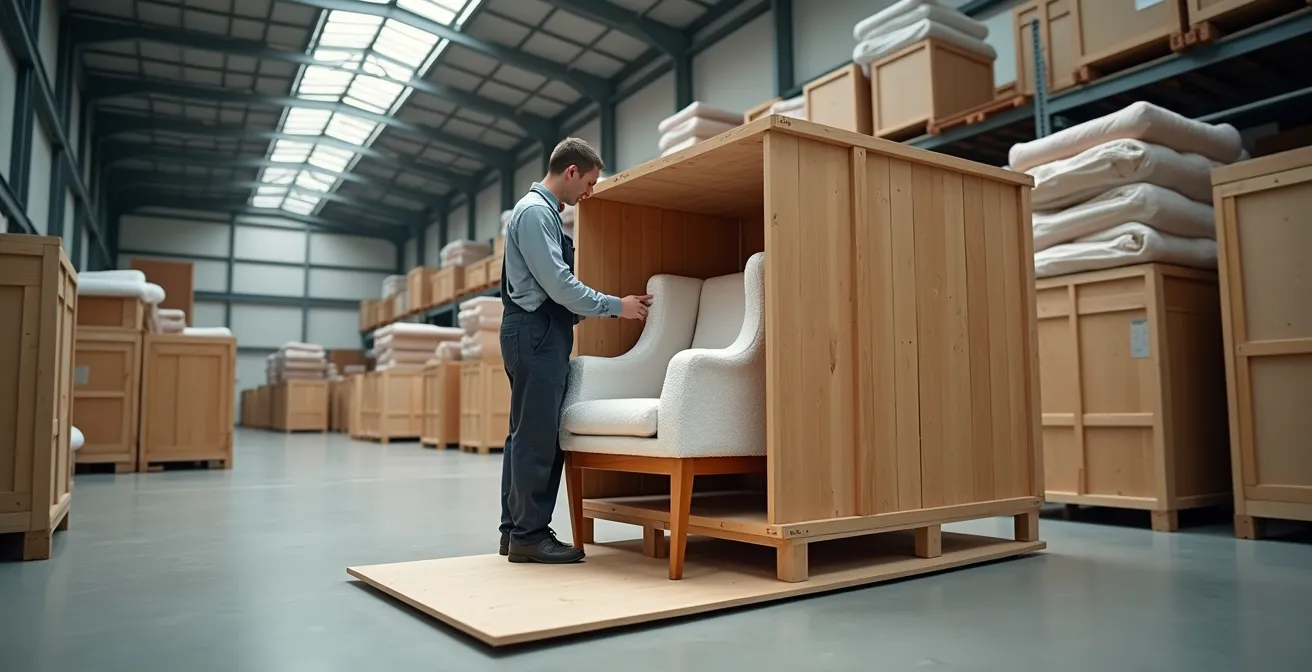
The process shown above—careful wrapping, precise placement in a custom crate, and the use of professional-grade padding—is the minimum standard for protecting a high-value artisan piece. Attempting to cut costs at this stage is the most common and costly mistake an importer can make. The cost of professional packing is a fraction of the potential loss from damage.
Finally, the packing process must be documented. A detailed packing list is required for customs, and photographic documentation of the item’s condition before and after packing is vital for any potential insurance claim. This documentation is another key element in your chain of custody.
How to Transfer Customer Data Between EU and US Without Breaking GDPR?
In any international transaction, data privacy is a serious consideration. While regulations like GDPR are primarily aimed at businesses, the principles are highly relevant from a buyer’s perspective. When importing an item, you will be required to share personal information. Understanding what data is necessary, who requires it, and how to protect it is a key logistical checkpoint. From a customs standpoint, certain personal data is mandatory. U.S. Customs and Border Protection (CBP) requires identifying information to establish your identity and residency status, typically via passport details. A detailed packing list and the Bill of Lading or Air Waybill from your carrier are also required.
The financial side of the transaction also involves data. Beyond the initial purchase price, importers must account for duties and fees. For formal entries (most shipments valued over $2,500), CBP charges a Merchandise Processing Fee (MPF). It is critical to note that the standard MPF fee is 0.3464% of the merchandise value, with minimum and maximum amounts. This is a separate charge from any customs duty owed based on the item’s classification.
To mitigate risks to your personal data during the purchasing phase, take specific precautions. Use a temporary or travel-specific email address for initial communications with artisans or shippers. For payment, utilize secure, third-party platforms like PayPal rather than direct bank transfers, which expose sensitive banking information. Once the transaction and shipping are complete, you have the right to request that the artisan, gallery, and shipping company delete your personal data from their records. This minimizes your long-term exposure to potential data breaches.
The Stitching Detail That Reveals a Fake Chanel Jacket instantly
Just as a couture expert can spot a fake Chanel jacket by the quality of its stitching, a savvy furniture buyer can identify counterfeit designer or artisan pieces by examining their own “stitching”—the micro-details of their construction. Mass-produced knockoffs excel at mimicking the overall form of a famous design, but they almost always fail on the finishing details. This is where authentication requires a forensic eye. Your inspection must go beyond a casual glance and become a systematic search for these tell-tale signs.
The investigation should focus on areas where cutting corners saves money for the counterfeiter. Look for authentication markers like tags, stamps on leather, or stickers on the base of the item. Analyze fabric quality: authentic pieces use high-grade textiles that are smoothly and evenly tucked, often with hand-stitching that creates a subtle wave effect. Buttons should be made of matching fabric or high-quality material, not cheap plastic, and be positioned with precision. Brand labels must be perfectly sewn and consistent in quality; a frayed or poorly-placed label is a major red flag. This level of micro-inspection is your best defense against sophisticated fakes.
Case Study: Advanced Authentication Technology
In response to a market where over half of buyers struggle to differentiate real products from fakes, high-end brands are adopting multi-layered security. This goes far beyond a simple label. Security hologram labels now feature both visible holographic elements and covert markings detectable only with special tools. This is often combined with other technologies: NFC chips allow for smartphone verification, RFID tracks the product through the supply chain, and serialized QR codes link to a secure online database for instant verification. While more common on new designer pieces, this technology highlights the importance of looking for and verifying all available authentication features.
These details, while small, collectively form a signature of authenticity that is difficult and expensive to replicate. Taking the time to perform this deep-dive inspection is a critical checkpoint before finalizing a high-value purchase.
Key Takeaways
- Authentication is Paramount: Master the techniques to distinguish handmade from machine-made and genuine from fake before purchase. This is your primary financial safeguard.
- Documentation is Your Shield: A clear chain of custody—from the artisan’s invoice to the Bill of Lading and professional packing lists—is essential for smooth customs clearance.
- Logistics is an Investment: Professional packing, crating, and freight forwarding are not costs to be minimized but investments in protecting the physical and financial value of your item.
Why Vintage Haute Couture Is Outperforming the S&P 500 as an Investment Class?
Much like vintage haute couture, select pieces of artisan and designer furniture should be viewed not just as decorative items, but as potential investment assets. Their value is driven by a similar set of factors: the reputation of the maker, scarcity (limited production), the use of rare or high-quality materials, and documented provenance. An item that ticks these boxes can appreciate in value significantly over time, often outperforming traditional financial instruments. However, realizing this investment potential requires treating the acquisition with the seriousness of a financial transaction.
From a customs and logistics standpoint, the investment angle adds layers of complexity. The declared value for customs must be accurate and defensible. Import duties are calculated on this value, and misrepresentation can lead to fines and seizure. Furthermore, the geopolitical landscape of trade can have a massive impact. For example, certain goods from specific countries face punitive tariffs. Wooden bedroom furniture from China, for instance, can face anti-dumping duty rates of up to 216.01%, a factor that makes sourcing authentic artisan pieces from other regions more financially attractive.
| Factor | Impact on Value | Authentication Importance |
|---|---|---|
| Artisan Reputation | High – established makers command premium prices | Critical – verify maker’s mark and provenance |
| Limited Production | Very High – scarcity drives value appreciation | Essential – confirm production numbers |
| Rare Materials | High – exotic woods increase investment potential | Important – verify CITES compliance |
| Design Recognition | Medium to High – iconic designs hold value | Moderate – document design attribution |
| Condition | Critical – pristine pieces appreciate most | Vital – distinguish original from restored |
| Provenance Documentation | Very High – proven history multiplies value | Essential – complete chain of ownership |
As one expert emphasizes, mitigating risk in this high-stakes market comes down to working with trusted sources.
Fakes are really the rare outliers and not the norm in the world of antiques and vintage furniture. When buying any piece of furniture that purports to be old, it’s important that you are working with a reputable dealer who has a history of handling the type of material and a track record of participating in vetted fairs.
– Anthony Barzilay Freund, Editorial director and director of fine art at 1stDibs
This advice underscores the entire philosophy of this guide: successful importation is about rigorous, systematic risk mitigation at every step. Whether buying for love or for investment, the process demands due diligence.
To ensure your acquisition is both a source of joy and a sound asset, engaging with a customs broker or logistics specialist is the final, and most crucial, checkpoint. They can provide a clear roadmap for duties, taxes, and required filings, transforming a potentially nightmarish process into a predictable and successful operation.
Frequently Asked Questions about Importing Artisan Furniture
What personal information is legally required on international shipping documents?
CBP requires passport or identification to establish identity and residency status, a detailed packing list of items, Bill of Lading or Air Waybill from carriers, and Customs Form 6059B for all travelers. Form 3299 is needed for unaccompanied articles.
Do I need a customs bond for importing personal furniture items?
In most cases, a customs bond is not required for non-commercial personal items. However, it’s necessary if items were owned for less than a year and valued over $2,500, or if importing restricted/regulated items requiring special handling.
How can I protect my data when buying from international artisans?
Use temporary or travel-specific email addresses for communication, pay via secure third-party platforms like PayPal instead of direct bank transfers, and request data deletion from artisans and shippers after transaction completion.