
A $2,000 price tag doesn’t guarantee ethical production; it demands rigorous, personal verification.
- True transparency is proven by immutable data (like blockchain), not by vague marketing claims on a brand’s website.
- A simple “Multiplier Rule” based on public data can help you estimate if an artisan’s wage is fair, cutting through brand opacity.
Recommendation: Treat your purchase like an investment and perform your own supply chain audit using the investigative frameworks in this guide.
The moment a luxury consumer considers a $2,000 handbag, a complex negotiation begins. It’s not just about aesthetics or brand prestige; it’s about the silent expectation that such a price ensures quality, exclusivity, and, increasingly, ethical integrity. You want to believe your investment doesn’t fund exploitation. The common advice is to check the brand’s website for a sustainability report, look for certifications, or trust the alluring “Made in Italy” label. But these are often just the polished surface of a deeply opaque industry.
These surface-level checks are the equivalent of judging a book by its cover. They are easily manipulated and prone to greenwashing, offering a false sense of security. The reality is that verifying the ethical backbone of a luxury product requires a shift in mindset. You must move from a passive consumer to an active investigator. This isn’t about cynicism; it’s about applying the same level of due diligence to an expensive purchase as you would to any other significant investment. It’s about performing your own supply chain forensics.
This guide abandons the platitudes. Instead, it provides you with an auditor’s toolkit. We will dismantle the marketing narratives and give you concrete, analytical methods to probe the truth. We will explore how to use digital provenance tools like blockchain, how to apply a simple calculation to estimate fair wages, and how to deconstruct the geographic loopholes that hide unethical labor. By the end, you will not just be buying a handbag; you will be validating its story with rigor and confidence.
This article provides a structured approach to your investigation. Each section is a tool, empowering you to look beyond the brand’s narrative and uncover the facts about where your money is truly going.
Summary: An Auditor’s Framework for Ethical Luxury Verification
- Why Blockchain Tracking Is the Only Proof of Genuine Ethical Sourcing?
- The “Multiplier” Rule to Estimate if the Artisan Was Paid a Living Wage
- Vintage Fur vs New Faux Fur: Which Has a Lower Environmental Impact?
- The “Made in Italy” Loophole That Hides Overseas Labor
- How to Repair Luxury Leather Goods to Extend Their Life by 20 Years?
- The “No Plastic Straws” Trap That Hides Massive Environmental Damage
- Why Buying Direct from the Workshop Saves the Craft and Your Wallet?
- How to Build a Capsule Wardrobe That Lasts 5 Years Without Looking Dated?
Why Blockchain Tracking Is the Only Proof of Genuine Ethical Sourcing?
In the realm of ethical verification, a brand’s promise is worthless without proof. While many companies offer charming stories about their artisans, the only verifiable truth lies in immutable data. This is where blockchain technology moves from a cryptocurrency buzzword to a critical tool for supply chain forensics. Instead of a vague “we source responsibly” statement, blockchain provides a digital passport for a product, tracking its journey from raw material to finished good in a way that cannot be altered.
This concept of digital provenance is being adopted by forward-thinking luxury conglomerates. For example, platforms are emerging to provide a single, shared source of truth for the entire industry. The Aura Blockchain Consortium, backed by LVMH, Prada Group, and others, demonstrates this shift, with over 15 million digital tokens registered on its platform as of early 2024. When a consumer scans a QR code on a product tied to such a system, they don’t just see a marketing page; they see a secure ledger detailing workshop IDs, material origins, and production dates. This is the difference between a story and evidence.
However, not all blockchain implementations are equal. A savvy consumer-auditor must ask critical questions. Does the tracking begin at the final assembly (Tier 1), or does it trace back to the farm or tannery (Tier 3)? Is the blockchain private (controlled by one company) or part of a public consortium (more transparent)? True ethical assurance comes from a system that offers end-to-end visibility, proving that every hand that touched the product was treated and compensated fairly, a fact recorded on an unchangeable digital ledger.
The “Multiplier” Rule to Estimate if the Artisan Was Paid a Living Wage
One of the most significant ethical questions is whether the artisan who crafted your bag earned a living wage. Brands rarely disclose this, hiding behind complex supply chains. However, you can create a powerful estimate using the “Multiplier Rule,” a simple piece of financial forensics. This rule starts with the final retail price and works backward. The typical markup from the full production cost to the final retail price for a luxury handbag is between 5x and 8x. Therefore, a $2,000 handbag likely cost between $250 and $400 to produce.
The next step is to isolate the labor cost. Within that production cost, direct labor typically accounts for 15% to 25%. This means for our $2,000 bag, the total payment to the workshop for labor was likely between $37.50 and $100. If a high-quality leather bag takes an expert 15-20 hours to create, this translates to an hourly wage of just $1.87 to $6.67. Now, compare this to the official living wage in the stated country of production. The gap is often staggering. A 2022 analysis in Vietnam, a major luxury production hub, found a 22.4% living wage gap for garment workers even to meet the local standard, a gap that widens dramatically when compared to the value they create.
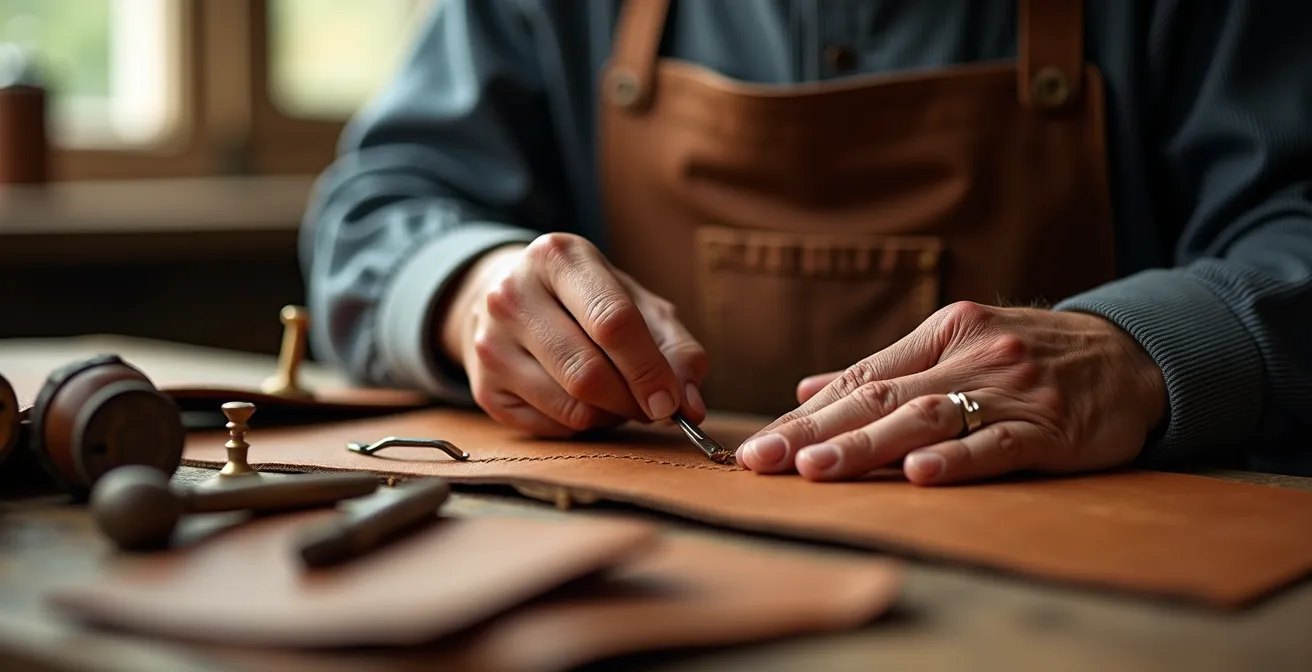
This calculation exposes the vast difference between the cost of skilled labor and the price of luxury. When a brand claims its bags are made in a high-wage country like Italy but the price seems too low relative to competitors, it’s a red flag that some stage of labor-intensive work was likely outsourced to a lower-wage region. The table below illustrates how drastically location impacts fair labor costs for the same work.
The following analysis, based on published benchmarks, breaks down how location dramatically impacts fair labor costs for the same item. The data from the Global Living Wage Coalition provides a stark comparison.
| Production Location | Monthly Living Wage (2024) | Est. Labor Hours per Bag | Labor Cost if Living Wage Paid |
|---|---|---|---|
| Ho Chi Minh City, Vietnam | $260-300 | 15-20 hours | $95-115 |
| Tuscany, Italy | €1,800-2,200 | 15-20 hours | €415-507 |
| Calculation Note | For a $2,000 bag with 5-8x markup, production cost is $250-400. Labor typically represents 15-25% of production cost. | ||
Vintage Fur vs New Faux Fur: Which Has a Lower Environmental Impact?
The ethical debate often simplifies material choice into a binary: natural (bad) vs. synthetic (good). The rise of “vegan leather” and faux fur is a testament to this. However, a rigorous audit requires a more sophisticated material lifecycle audit. The question isn’t just “what is it made of?” but “what is its total impact from creation to disposal?” This is most evident in the fur debate. While the ethical case against new fur is clear for many, comparing a 50-year-old vintage mink coat to a new petroleum-based faux fur jacket complicates the environmental equation.
The new faux fur, often made from acrylic or polyester, is a form of plastic. It contributes to microplastic pollution with every wash and will persist in a landfill for centuries. Its production is energy-intensive and relies on fossil fuels. A vintage fur piece, on the other hand, has already had its primary impact. Its continued use requires no new resources, and at the end of its extended life, it is biodegradable. The ethical calculus shifts from animal welfare alone to include plastic pollution, resource depletion, and end-of-life waste.
This principle extends to all materials. Visionary brands like Stella McCartney have built their identity on avoiding animal products, demonstrating that luxury is possible with innovative, solvent-free alternatives and natural fibers like raffia. However, the true test of any material—be it “vegan leather” made from pineapple leaves or recycled plastic—is its full lifecycle performance. An informed auditor must consider:
- Raw Material Sourcing: Is the “vegan” material derived from food crops competing for land, or is it a genuine byproduct?
- Chemical Processing: Does the material require harsh chemicals to produce, and how is that waste managed?
- Durability and Longevity: Will this material last as long as traditional high-quality leather, or will it need to be replaced sooner, negating its initial benefits?
- End-of-Life: Is it biodegradable, compostable, or destined for a landfill?
Case Study: Stella McCartney’s Material Innovation Journey
As a luxury fashion house that has never used leather, fur, or any animal byproducts in its 20+ year history, Stella McCartney demonstrates that luxury handbags can be made with solvent-free alternatives and sustainable raffia while maintaining high-end appeal. This long-term commitment to material R&D provides a model for how brands can move beyond simple “vegan” labels to genuine, science-backed sustainability.
The “Made in Italy” Loophole That Hides Overseas Labor
The “Made In” label is one of the most powerful—and misleading—tools in luxury marketing. A “Made in Italy” stamp evokes images of skilled artisans in Tuscan workshops. However, the legal definition is notoriously flexible. In many cases, a product can be legally labeled “Made in Italy” if only the final, often minor, stages of assembly occurred there. The labor-intensive stitching, cutting, and preparation can be—and often are—outsourced to factories in Eastern Europe, North Africa, or Asia, where labor is cheaper and less regulated.
This is a classic geospatial loophole. Brands leverage the prestige of one country’s reputation while benefiting from the economic realities of another. The lack of transparency is systemic. A report from Human Rights Watch highlights this opacity, revealing that only 52% of major fashion brands disclose their first-tier supplier list, and far fewer reveal the subcontractors and raw material suppliers where the bulk of labor occurs. Without this data, the “Made In” label is an unreliable indicator of ethical labor practices.

A true ethical audit requires piercing this veil. Instead of trusting the country label, demand to know the specific workshop. Brands that are genuinely transparent are proud to share this information. As the Ecothes Fashion Report notes when highlighting exemplary practices, true commitment is about radical openness. As they point out in their analysis of leading brands:
All ethical leather handbags are crafted responsibly in family-run factories throughout Vietnam, Italy, Turkey, and Argentina. Most importantly, Cuyana thrives on being as transparent as possible, and thus, the website allows us to track the entire supply suppliers list.
– Ecothes Fashion Report, 15 Sustainable Handbag Brands You Should Know [2025]
When a brand hides its suppliers, it is a significant red flag. It suggests there is something in their supply chain they do not want you, the consumer-auditor, to see. The absence of transparency is, in itself, a piece of data.
How to Repair Luxury Leather Goods to Extend Their Life by 20 Years?
The most sustainable product is the one that already exists. A crucial part of any ethical audit, therefore, is assessing an item’s potential for longevity and repair. A $2,000 handbag should not be a disposable fashion item; it should be an heirloom capable of lasting decades. Extending its life by 20 years through proper care and repair drastically reduces its overall environmental footprint, making the initial resource investment far more efficient.
This requires a proactive mindset from the owner and a commitment from the brand. Before purchasing, investigate the brand’s repair policy. Do they offer in-house refurbishment services? Can they provide replacement hardware years after the original purchase? A brand committed to the full lifecycle of its products will have a clear and accessible repair program. This is a strong positive signal of both quality and ethical intent. Brands like Cuyana, for example, have built this into their model. Their Lean Closet Program not only facilitates repairs but also provides a take-back system for products at the end of their life, ensuring they are given a second chance rather than being discarded.
For the owner, maintenance is an active responsibility. It’s not about being precious with the item, but about understanding its material needs. High-quality leather is a skin; it needs to be cleaned, conditioned, and protected from the elements. Different types of damage require different levels of intervention, from simple at-home fixes to specialist repairs. Understanding this triage is key to cost-effective and sustainable ownership.
- Minor scuffs and surface scratches: These can often be addressed at home. Using a pH-neutral leather cream and a soft microfiber cloth can buff out small imperfections and restore moisture to the leather.
- Loose stitching or minor thread breaks: A local, reputable cobbler is your best ally. They can often perform near-invisible repairs on stitching with perfectly matched thread, preserving the bag’s structural integrity.
- Hardware issues (zippers, clasps): For broken zippers, clasps, or feet, a specialist repair shop is necessary. They have access to a wider range of replacement parts that can match the original’s quality and finish.
- Structural damage or color restoration: For major issues like deep gouges, significant color fading, or torn leather, returning to the brand’s official repair service is the safest bet. They have access to the original materials and color dyes.
- Preventative Care: The most important step is prevention. Applying a UV-protectant conditioner every 3-4 months is crucial to prevent the leather from drying out, cracking, and fading over time.
Case Study: Cuyana’s Lean Closet Repair Program
Cuyana facilitates repairs for its handbags and other pieces, actively encouraging longevity. Furthermore, it gives a second life to used products through its Lean Closet Program, where customers can trade in old items for credit, ensuring the materials are reused or recycled responsibly rather than ending up in a landfill.
The “No Plastic Straws” Trap That Hides Massive Environmental Damage
In the world of corporate sustainability, a dangerous trap awaits the well-intentioned consumer: performative environmentalism. This is the “No Plastic Straws” trap—a highly visible, low-impact action designed to generate positive PR while distracting from massive, hidden environmental damage elsewhere in the supply chain. A luxury brand might boast about its recycled packaging or carbon-neutral shipping while its leather tanneries are discharging toxic chromium into local water systems.
An effective auditor must learn to distinguish between green-marketing and material action. Material actions are fundamental, often costly changes to core business practices that significantly reduce harm. This includes investing in chrome-free tanning methods, publishing verified water toxicity reports from suppliers, or tying executive bonuses to measurable emissions reductions, not just marketing metrics. These are the details that are rarely found on the front page of a sustainability report. In fact, the 2023 Fashion Transparency Index reveals that only 1% of major fashion brands disclose how many workers in their supply chain are actually being paid a living wage, a truly material metric.
The rise of “vegan leather” is another area rife with this kind of misdirection. A brand might eliminate plastic bags at its retail stores—a visible, positive step—while heavily promoting handbags made from PVC, one of the most environmentally damaging plastics. Without a full lifecycle perspective, the consumer is led to believe they are making an ethical choice, when in reality they are trading one problem for another. The key is to be skeptical of easy, highly publicized “green” initiatives and to dig deeper for data on the less glamorous, more impactful aspects of production.
Your Greenwashing Detection Plan: From Red Flags to Real Action
- Check for Data Deflection: Does the brand promote recycled packaging (easy) while hiding tannery water pollution data (hard)? This is a classic red flag. Material action would be publishing verified water toxicity reports.
- Analyze Material Swaps: Do they eliminate plastic bags at retail (visible) while using PVC in their “vegan leather” (hidden)? Material action means investing in genuinely biodegradable alternatives and chrome-free tanning methods.
- Follow the Money: Are C-suite bonuses tied to genuine emissions reduction targets, or are they linked to marketing metrics and brand perception scores? The company’s financial incentives reveal its true priorities.
- Compare Commitments: Does the brand set vague goals like “becoming more sustainable” or specific, time-bound targets like “reduce water usage by 50% by 2030”? Specificity and accountability are signs of material action.
- Assess the Scale of the Solution: Does the brand launch a tiny “eco-friendly” capsule collection while the other 99% of its production remains unchanged? This is tokenism, not a systemic shift.
Why Buying Direct from the Workshop Saves the Craft and Your Wallet?
The traditional luxury retail model is built on layers of intermediaries, each adding a significant markup. A handbag leaves the artisan’s workshop, goes to the brand, then to a wholesaler or distributor, and finally to a high-end department store. By the time it reaches the consumer, its price has been inflated multiple times, often with little of that increase returning to the original craftsperson. This system not only makes products exorbitantly expensive but also distances the consumer from the person who made their item.
Buying directly from workshops or from direct-to-consumer (DTC) brands that own their production is a powerful way to disrupt this model. It financially supports the craft by channeling a larger portion of the final price back to the source. It also provides the consumer with a much fairer price for the same, if not better, quality of craftsmanship. As Annie from Zanniee highlights after investigating the work of leather expert Tanner Leatherstein, the cost of materials and labor for a top designer bag can be astonishingly low compared to its retail price.
If you’re curious about what it costs to make a luxury bag, check out Tanner Leatherstein’s YouTube channel. He’s a leather expert who cuts open designer handbags to show exactly what they’re made of. I was surprised to learn that top designer bags only cost around $160 to $200 to make with materials and labor, while charging more than 10x the markup.
– Annie from Zanniee, Why Designer Handbags Are Overpriced
This “markup bloat” is a structural inefficiency that benefits middlemen more than the creator or the consumer. The following table breaks down how the final price of a handbag can skyrocket in the traditional system compared to a direct-from-workshop model.
| Cost Component | Direct from Workshop | Through Luxury Retailer |
|---|---|---|
| Production Cost | $200-250 | $200-250 |
| Brand Markup | 2-3x ($400-750) | 3-4x ($600-1000) |
| Wholesale Markup | N/A | 1.5-2x ($900-2000) |
| Retail Markup | N/A | 1.5-2x ($1350-4000) |
| Final Price to Consumer | $400-750 | $1350-4000 |
By choosing brands that operate on a direct model, you are not just getting better value; you are actively voting for a more transparent and equitable system where craftsmanship is directly rewarded.
Key Takeaways
- Digital provenance via blockchain is the emerging gold standard for supply chain verification, offering immutable proof over marketing stories.
- The “Made In…” label is often misleading; a true audit focuses on tracing labor to specific workshops, not just countries.
- True sustainability combines ethical production with longevity, making repairability and timeless design crucial investment criteria.
How to Build a Capsule Wardrobe That Lasts 5 Years Without Looking Dated?
The ultimate act of sustainable consumption is to buy less, but buy better. This philosophy is the foundation of a capsule wardrobe, a curated collection of high-quality, versatile pieces that transcend fleeting trends. A $2,000 handbag, when chosen correctly, should be a cornerstone of such a wardrobe, an investment piece that serves you for years, not a single season. This requires a shift from trend-chasing to a focus on timeless design and functional longevity.
Building a future-proof collection starts before the purchase. When evaluating a luxury handbag, ask yourself a critical question: “Will this bag’s style and function fit my life in five years?” This forces you to look past temporary infatuations and consider the core attributes of the piece. Timeless silhouettes like a classic tote, a well-structured crossbody, or a minimalist satchel in versatile colors (black, tan, navy, grey) are far more likely to remain relevant. The key is to look for subtle, distinctive details—unique hardware, an interesting texture, a perfect stitch—rather than loud, trend-driven logos or shapes.
Furthermore, an investment piece is only as good as its durability and the brand’s commitment to its lifecycle. Brands like ABLE have built their reputation not just on transparency but on creating products designed for the long haul, using premium, vegetable-tanned leather and sturdy materials. Calculating the cost-per-wear over an anticipated five-year lifespan is a powerful auditing tool. A $2,000 bag used 2,000 times (roughly once a day for five years) has a cost-per-wear of just $1, making it a far more sustainable and financially sound investment than a $200 bag that falls apart after one season.
- Choose timeless silhouettes: Opt for classic shapes like the tote, crossbody, or satchel in versatile colors with subtle, high-quality details.
- Question future relevance: Before buying, ask, “Will this bag’s style and function still fit my life in five years?”
- Verify repair services: Confirm the brand’s commitment to repair programs and the long-term availability of spare parts.
- Adopt a mindful ownership rule: Implement a “One In, One Out” policy, amended with a “repair first” mindset before considering any replacement.
- Calculate cost-per-wear: Aim for a cost-per-wear of under $1 over a five-year period to confirm the item is a true sustainability investment.
Case Study: ABLE’s Transparency and Longevity Model
ABLE handbags prioritize quality and durability, using premium, vegetable-tanned leather that avoids harsh chemicals and sturdy materials built to last. Each handbag reflects the brand’s commitment to transparency, with clear information provided to consumers on pricing and sourcing, creating a model where longevity and ethics are intertwined.
By embracing this investigative mindset, you transform a simple purchase into a statement of your values. You are no longer just a consumer, but a patron of good practices, a supporter of true craftsmanship, and an auditor demanding accountability. The next time you consider a luxury purchase, apply this framework. Demand the data, question the narrative, and invest in pieces whose stories you can verify and be proud to carry for years to come.