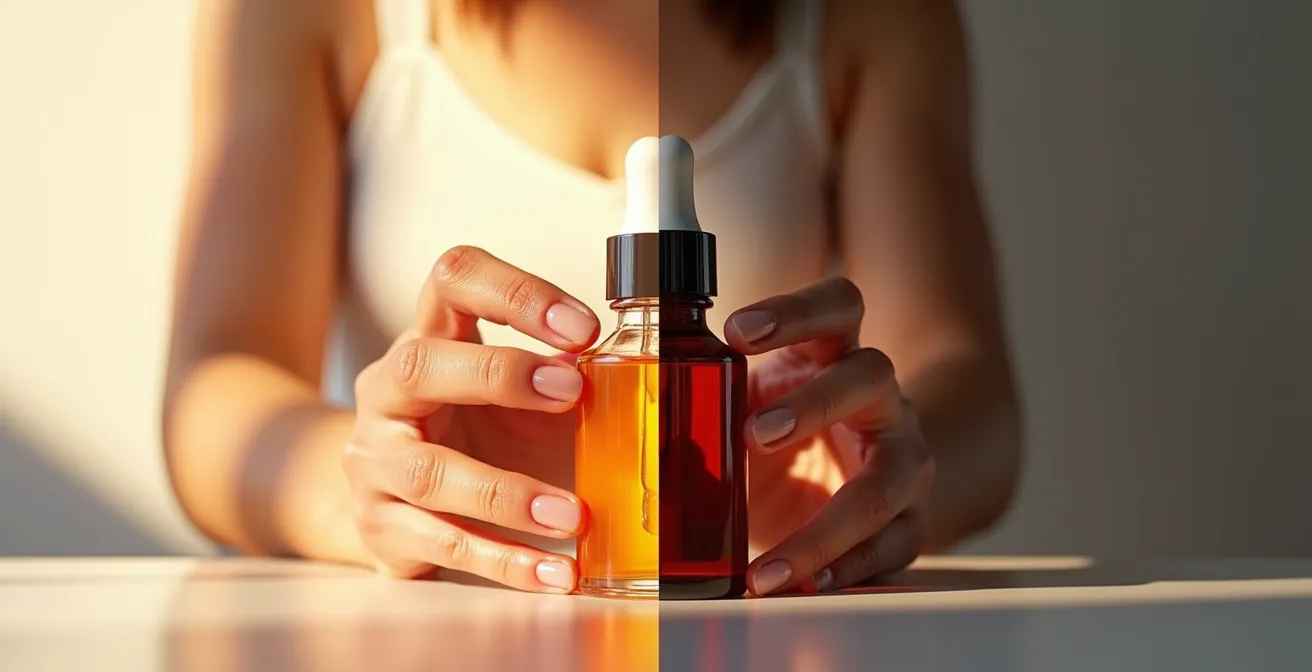
The debate over Vitamin C versus Retinol is a distraction; the true efficacy of any anti-aging serum is dictated by its formulation science, not its hero ingredient.
- A product’s potency is determined by its stability, concentration, and delivery system (packaging and pH), which are often compromised in popular products.
- Higher concentrations do not guarantee better results and often lead to a “saturation point” where irritation outweighs benefits.
Recommendation: Prioritize products with proven formulation integrity—like those in airless pumps with evidence-backed concentrations—over those with the most appealing marketing claims.
The skincare world presents a constant duel: Vitamin C, the daytime defender, against Retinol, the nighttime rebuilder. Consumers are led to believe that choosing the “right” ingredient is the single most important step for achieving youthful, radiant skin. This forces a choice based on generalized benefits—brightening versus wrinkle reduction—while overlooking the critical factors that determine if these powerful molecules will even work. Most discussions revolve around when to apply them or the risk of mixing, but rarely touch upon the fundamental science of what makes a serum effective in the first place.
But what if this entire “versus” debate is asking the wrong question? The uncomfortable truth is that a high-potency ingredient in a poor formulation is not just ineffective; it can be a waste of money and a source of irritation. The real key to unlocking anti-aging results lies not in the ingredient name on the front of the bottle, but in the overlooked science on the back: the molecular integrity of the active, its bioavailability threshold, and the overall formulation efficacy. A product’s packaging, its pH level, and the precise concentration are the true determinants of success.
This article will dissect the science behind serum efficacy. We will move beyond the superficial benefits of Vitamin C and Retinol to explore why many serums fail at a molecular level. By understanding the principles of stability, concentration, and absorption, you will gain the expertise to evaluate any serum not by its marketing, but by its scientific merit, enabling you to finally choose a product that delivers tangible results.
This guide breaks down the critical formulation factors that determine a serum’s true performance. The following sections will equip you with the scientific knowledge to see past the marketing and identify products that are genuinely effective.
Summary: Decoding Serum Efficacy Beyond the Hype
- Why Your Vitamin C Serum Turned Orange and Is Now Useless?
- Is 20% Niacinamide Better Than 5%, or Just More Irritating?
- Pipette vs Airless Pump: Which Packaging Preserves Antioxidants Longer?
- The Bacterial Risk of “Preservative-Free” Water-Based Serums
- How to Layer Water and Oil Serums to Maximize Absorption?
- Why Mixing Vitamin C and Retinol Causes Irritation for 60% of Users?
- How to Order the Best Dishes by Knowing the Local Harvest Calendar?
- How to Treat Adult Acne Without Destroying Your Skin Barrier?
Why Your Vitamin C Serum Turned Orange and Is Now Useless?
The familiar sight of a Vitamin C serum turning from clear to a distinct yellow or orange is a direct visual indicator of its demise. This color change is not a sign of maturation but of degradation. It signifies that the L-ascorbic acid, the most potent form of Vitamin C, has oxidized. When exposed to light, air, and heat, it undergoes a chemical reaction that converts it into dehydroascorbic acid and, eventually, other compounds that have no antioxidant benefit. In fact, an oxidized serum can become pro-oxidant, potentially generating free radicals and contributing to skin damage—the very thing it was meant to prevent.
This process, known as an oxidative cascade, renders the product ineffective. You are no longer applying a protective antioxidant but a useless, and potentially harmful, solution. The molecular integrity of Vitamin C is exceptionally fragile, which is why formulation and packaging are not just details but the core of the product’s efficacy. A serum that begins to change color within weeks of opening is a clear sign of a formulation that failed to protect its primary active ingredient from inevitable decay.
Understanding this chemical vulnerability is the first step toward becoming a more discerning consumer. A serum’s initial potency means nothing if its molecular integrity is not preserved from the factory to your face. The tell-tale orange tint is your evidence that the promised benefits have vanished, long before the bottle is empty.
Is 20% Niacinamide Better Than 5%, or Just More Irritating?
The “more is more” philosophy in skincare marketing has led to a concentration arms race, particularly with ingredients like niacinamide. While brands tout high-strength serums of 10%, 20%, or even higher, clinical evidence suggests this escalation offers diminishing returns and an increased risk of irritation. The skin has a concentration saturation point for many actives, beyond which it cannot absorb or utilize more of the ingredient. Any excess simply sits on the surface, contributing to sensitivity, redness, and a compromised skin barrier without providing additional therapeutic benefits.
For niacinamide, studies have consistently shown that concentrations between 2% and 5% are effective for a wide range of concerns, including improving barrier function, reducing redness, and regulating sebum. For instance, a clinical safety assessment confirmed no irritation at concentrations up to 5%, whereas higher levels increase the potential for cumulative irritation. Pushing the concentration to 20% does not quadruple the effectiveness; it primarily increases the likelihood of an inflammatory response in many users.
Furthermore, the declared concentration on a label may not even reflect the product’s actual composition, undermining the entire premise of choosing a product based on its percentage claim.
Case Study: The Unreliability of Niacinamide Label Claims
A revealing analysis of 36 commercial cosmetic products highlighted a significant disparity between marketed and actual niacinamide concentrations. The investigation found that while most products met or slightly exceeded their labeled amounts (102-112%), two products contained far less than advertised (only 47% and 57% of the claimed concentration). This wide variability demonstrates that consumers cannot blindly trust percentage claims, reinforcing the need to evaluate products based on a brand’s transparency and formulation expertise rather than just a number.
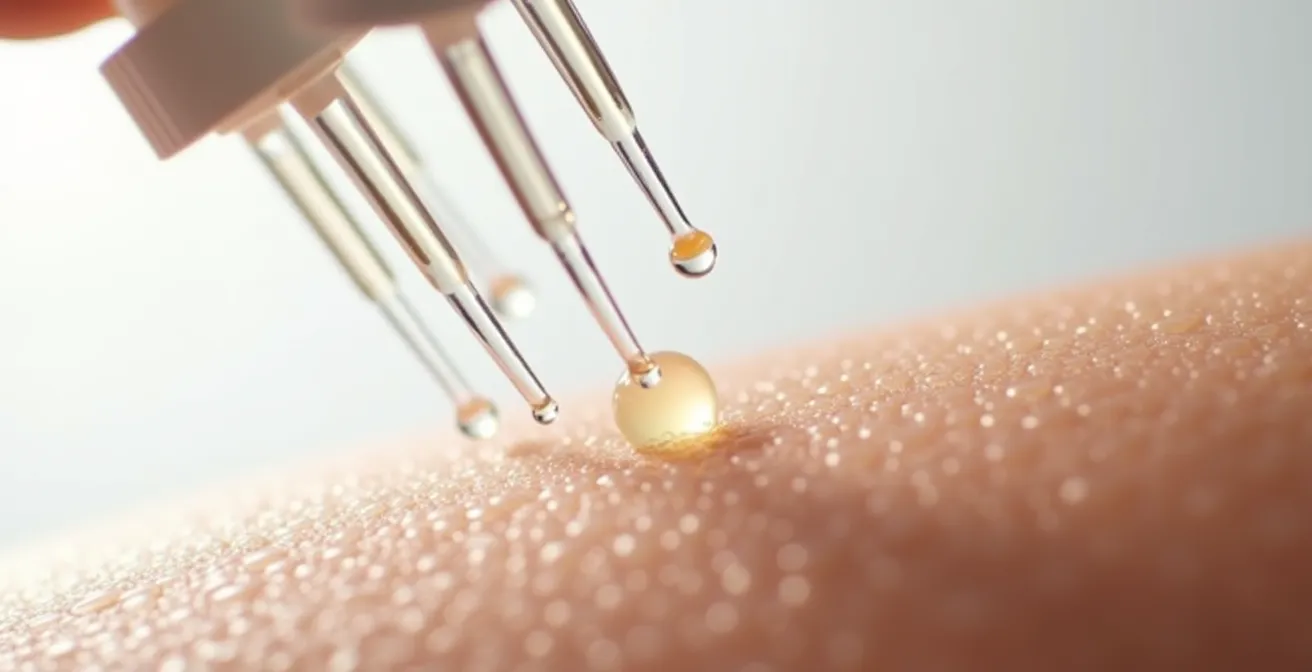
This visual representation of serum absorption highlights how the skin reaches a saturation point. Past a certain concentration, the skin’s ability to process an active plateaus, and the risk of surface irritation begins to climb. The optimal concentration is one that maximizes benefits while staying well below this irritation threshold, a balance that high-percentage formulas often ignore.
Pipette vs Airless Pump: Which Packaging Preserves Antioxidants Longer?
The choice of packaging is not an aesthetic decision; it is a critical component of a serum’s formulation that directly impacts the stability and potency of its active ingredients. This is especially true for highly volatile antioxidants like Vitamin C. The common glass dropper, or pipette, while popular and conveying a certain apothecary chic, is one of the worst delivery systems for preserving molecular integrity. Every time the bottle is opened, the contents are exposed to oxygen and light, accelerating the oxidative cascade that renders the serum useless.
Furthermore, the act of drawing serum into the pipette and re-inserting it introduces air into the bulk of the formula and risks microbial contamination. This repeated exposure is a primary reason why many Vitamin C serums degrade so quickly. In fact, research on packaging impact shows a potential 15-20% potency loss per month in standard dropper bottles. This means a significant portion of the active ingredient you paid for is gone before you can even use it.
In contrast, airless pump packaging is scientifically superior for protecting sensitive formulations. This system uses a vacuum mechanism to dispense the product without letting air in, and the opaque containers shield the contents from light. This design minimizes exposure to a serum’s two main enemies—air and light—preserving the potency of the active ingredients from the first pump to the last. For a notoriously unstable ingredient like L-ascorbic acid, choosing a product in an airless pump is one of the most reliable indicators of a brand that prioritizes formulation efficacy over marketing aesthetics.
The Bacterial Risk of “Preservative-Free” Water-Based Serums
The “preservative-free” claim has become a popular marketing tool, tapping into consumer desire for “clean” and “natural” beauty. However, when it comes to water-based (aqueous) formulations, this claim is not just misleading—it’s a significant safety risk. Water is the basis of life, not just for humans but for bacteria, yeast, and mold. Any aqueous product formulated without an effective preservative system is an ideal breeding ground for microbial contamination, turning your skincare into a potential source of breakouts, infections, and contact dermatitis.
Truly “self-preserving” formulas exist, but they are typically anhydrous (water-free), such as oil-based serums or balms, or formulated at extreme pH levels (below 3 or above 10) that are hostile to microbial life. For the vast majority of water-based serums, a broad-spectrum preservative system is not an optional evil; it is an essential component of a safe and stable product. Common contaminants like *P. aeruginosa* and *S. aureus* can thrive in unpreserved solutions, leading to skin issues that consumers may mistakenly blame on the active ingredients themselves.
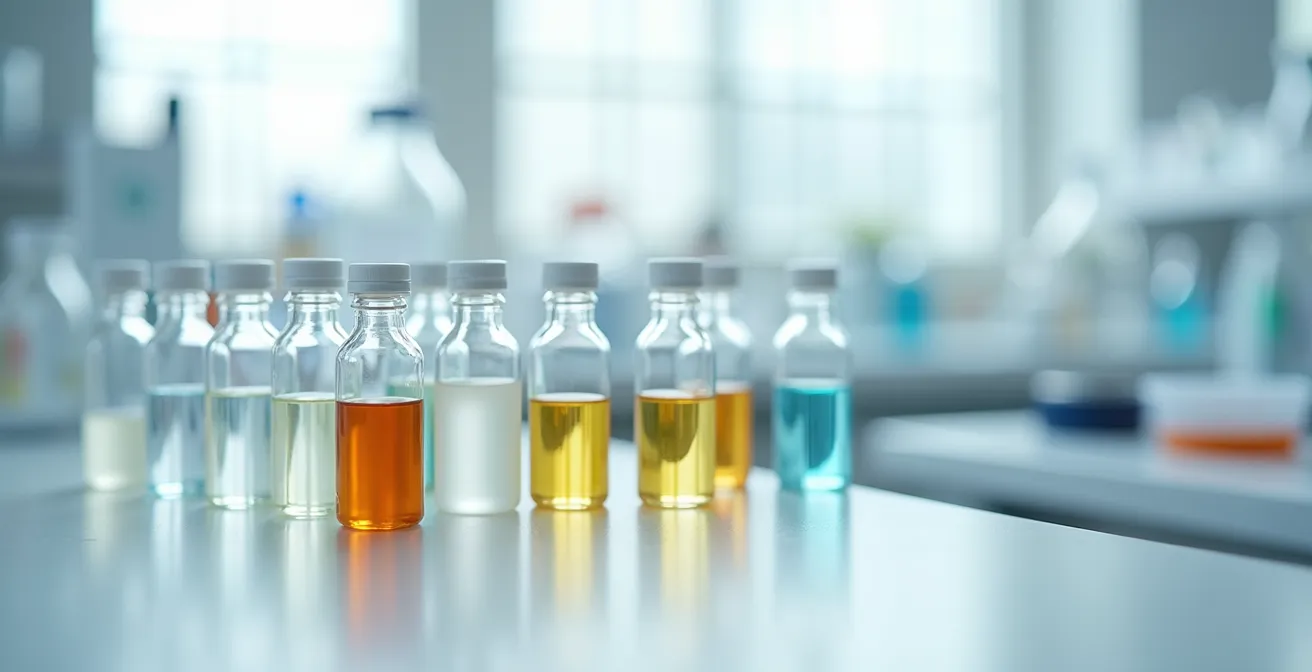
This image provides a stark look at what can happen inside a poorly preserved product. The cloudiness and separation are visual signs of rampant microbial growth. While consumers often fear synthetic preservatives like phenoxyethanol, these ingredients are rigorously tested for safety and efficacy. Many so-called “natural” alternatives are either ineffective against a broad range of microbes or are themselves common allergens, making well-researched synthetic options the scientifically superior choice for ensuring product safety.
How to Layer Water and Oil Serums to Maximize Absorption?
Effective layering is a practical application of formulation science. The sequence in which you apply your products can dramatically impact their ability to penetrate the skin and perform their function. The cardinal rule of layering is to apply products from the thinnest to the thickest consistency, which generally corresponds to applying water-based products before oil-based ones. This ensures that the smaller, water-soluble molecules can penetrate the skin without being blocked by larger, occlusive oil-based molecules.
Beyond texture, the pH of your products is a critical factor. For an ingredient like L-ascorbic acid to be effective, it must be formulated at a low pH to reach its bioavailability threshold. Crucial penetration studies demonstrate that Vitamin C requires a pH below 4 to be absorbed meaningfully by the skin. Applying a high-pH product, like some moisturizers or even other serums, immediately after your Vitamin C serum can neutralize its acidity and render it ineffective before it has a chance to work.
To maximize absorption and efficacy, follow a precise sequence:
- Begin with clean, slightly damp skin to aid penetration.
- Apply any low-pH, water-based serums first, such as a well-formulated Vitamin C serum.
- Wait at least 60-90 seconds. This critical pause allows the low-pH active to absorb and begin its work without being immediately neutralized by the next product.
- Proceed with other water-based serums, gels, or hydrating products, moving from the thinnest to the thickest texture.
- Finally, apply oil-based serums or facial oils. These lipid-based products will not penetrate as deeply but are excellent at sealing in the hydration from the previous layers and reinforcing the skin’s barrier.
This methodical approach ensures that each product is given the optimal environment to achieve its intended function, transforming your routine from a simple application of products into a strategic sequence that maximizes results.
Why Mixing Vitamin C and Retinol Causes Irritation for 60% of Users?
The common advice to avoid using Vitamin C and Retinol together is not a myth; it is grounded in fundamental chemistry. The primary conflict arises from their dramatically different pH requirements for stability and efficacy. As established, L-ascorbic acid requires a highly acidic environment (pH below 4) to remain stable and penetrate the skin. In contrast, most Retinol formulations are designed to work at a much higher, more skin-neutral pH (typically between 5.5 and 6.0).
When you layer these two products simultaneously, you create a chemical clash on your skin. The higher pH of the Retinol product can raise the pH of the Vitamin C, destabilizing it and preventing its absorption. At the same time, the low pH of the Vitamin C can reduce the efficacy of the Retinol and, more importantly, increase the potential for irritation. This pH mismatch forces the skin to work overtime to re-establish its natural pH balance, leading to the redness, peeling, and sensitivity that many users experience. You end up with the worst of both worlds: reduced efficacy and increased irritation.
The scientifically sound solution is not to choose one over the other, but to separate their application. A clinical review of best practices confirms the optimal approach: use a well-formulated Vitamin C serum in the morning to leverage its antioxidant properties against daily environmental aggressors, and apply Retinol at night to support the skin’s natural repair and regeneration processes without the risk of photosensitivity. For maximum stability and effect, the review notes that the most effective Vitamin C formulas combine 15% L-ascorbic acid with 1% Vitamin E and 0.5% ferulic acid.
How to Order the Best Dishes by Knowing the Local Harvest Calendar?
Just as a chef relies on a harvest calendar to source the freshest, most potent ingredients for a dish, a discerning skincare user should think about their routine in terms of “ingredient freshness” and seasonal needs. This H2 title, seemingly out of place, serves as a powerful metaphor. The “harvest” for skincare is not about a season, but about the moment of formulation and the journey to your skin. An ingredient’s peak potency—its “freshness”—is highest right after it is made and diminishes over time, accelerated by poor packaging and exposure.
Your skin’s needs also follow a “seasonal” calendar. In the winter, when the air is dry and cold, your skin’s barrier is more vulnerable. The focus should be on “harvesting” hydrating and barrier-repairing ingredients like ceramides, hyaluronic acid, and fatty acids. This is the time to be gentle and prioritize nourishment over aggressive treatments. Strong actives may be less tolerated during these months.
Conversely, in the summer, increased UV exposure means your skin requires a more robust “harvest” of antioxidants to combat environmental damage. This is the peak season for a stable, high-quality Vitamin C serum to protect against free radicals. You might also find your skin is more resilient and can better tolerate actives like exfoliants. Thinking about your skincare ingredients in this way—considering both their inherent stability (“freshness”) and your skin’s changing seasonal needs—allows you to create a dynamic, responsive routine that delivers the right “nutrients” at the right time, maximizing efficacy and minimizing irritation.
Key takeaways
- A serum’s efficacy depends on its complete formulation—stability, pH, and concentration—not just the hero ingredient’s name.
- Higher concentrations are not always better; they often increase irritation without adding benefits due to the skin’s “saturation point.”
- Packaging and preservatives are not minor details; airless pumps and effective preservative systems are critical for maintaining a serum’s potency and safety.
How to Treat Adult Acne Without Destroying Your Skin Barrier?
Treating adult acne often involves a harsh, aggressive approach that prioritizes eradicating pimples at all costs. This strategy frequently backfires, as overloading the skin with high-strength actives like benzoyl peroxide and salicylic acid can obliterate the skin barrier. A compromised barrier is unable to retain moisture or defend against irritants, leading to a vicious cycle of inflammation, dehydration, and paradoxically, more breakouts. The key to breaking this cycle is to adopt a “barrier-first” methodology that prioritizes healing before treating.
This approach involves temporarily ceasing all potent actives and focusing exclusively on repairing the skin’s natural defenses. This means using gentle, non-stripping cleansers and loading up on ingredients that mimic the barrier’s natural structure: ceramides, cholesterol, and fatty acids. Only once the barrier is healthy and resilient—indicated by a reduction in redness, tightness, and sensitivity—should you slowly and methodically reintroduce acne-fighting actives. This ensures the skin is strong enough to tolerate treatment without triggering a new wave of inflammation.
By treating the skin barrier as the foundation of skin health, you can effectively manage adult acne while creating a complexion that is calm, hydrated, and resilient. This patient, strategic approach yields far more sustainable results than a short-sighted attack on blemishes.
Action Plan: Auditing Your Acne Treatment for Barrier Health
- Assessment: Identify all current actives and potential irritants in your routine (e.g., harsh cleansers, high-strength acids, fragrance).
- Inventory: List existing barrier-supporting products you own (e.g., ceramide moisturizers, gentle cleansers, hydrating toners).
- Alignment: Pause all strong actives. For 1-2 weeks, ensure your routine exclusively prioritizes hydration and repair with ceramides, cholesterol, and fatty acids.
- Phased Evaluation: Evaluate actives for reintroduction based on tolerance, starting with the gentlest option first (e.g., 2-5% niacinamide or a PHA).
- Integration Plan: Create a weekly schedule for reintroducing one active at a time, using buffering techniques (e.g., retinol applied over moisturizer) or short contact therapy (e.g., benzoyl peroxide wash for 5 minutes).
By moving beyond the simplistic “Vitamin C vs. Retinol” debate and focusing on the science of formulation efficacy, you can finally invest in products that are not just marketed to work, but are scientifically designed to deliver results.
Frequently Asked Questions about Serum Formulation
What makes a serum truly ‘self-preserving’ without traditional preservatives?
Anhydrous (water-free) formulations or those with extreme pH levels naturally inhibit microbial growth. Products with a pH below 3 or above 10 create hostile environments for bacteria, making them self-preserving.
Which microbes commonly contaminate unpreserved water-based serums?
P. aeruginosa, S. aureus, and various yeasts and molds thrive in unpreserved aqueous formulas, potentially causing acne breakouts, skin irritation, and contact dermatitis.
Are ‘natural’ preservatives like grapefruit seed extract safer?
Many popular natural alternatives are either ineffective as broad-spectrum preservatives or are common allergens themselves. Rigorously tested synthetic preservatives like phenoxyethanol often provide a safer and more reliable method of ensuring product safety.