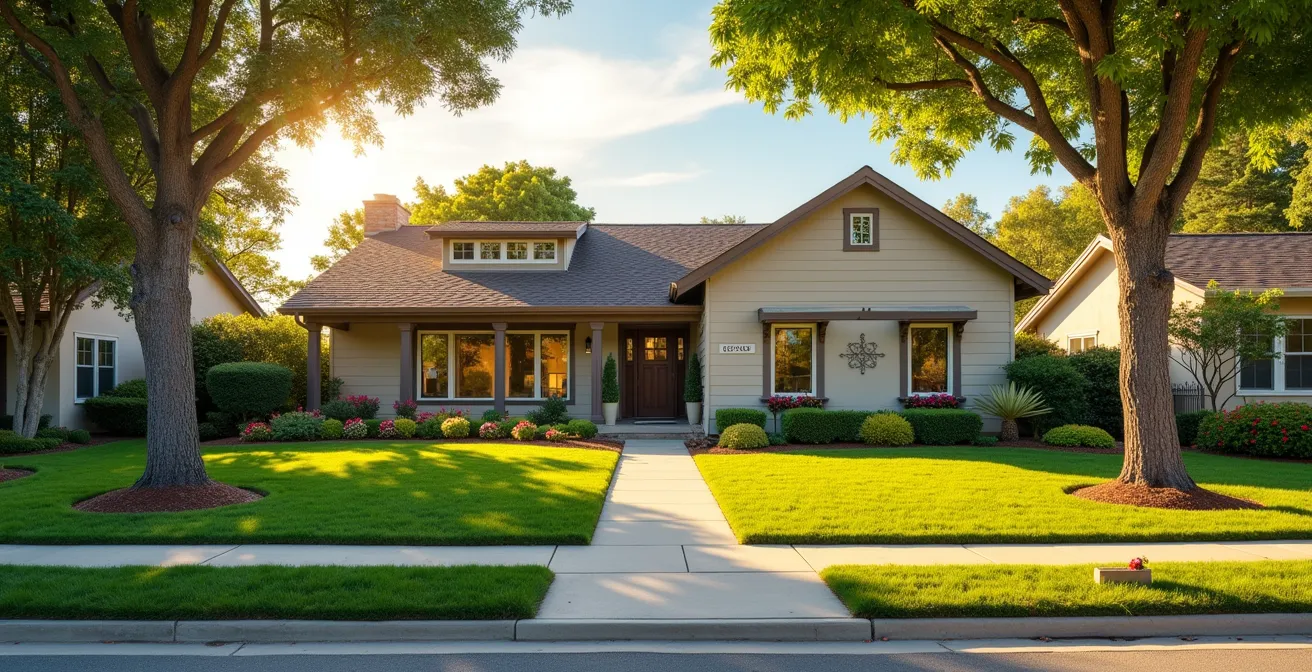
The key to maximizing your home’s sale price isn’t spending more on renovations; it’s strategically eliminating any reason for a buyer to hesitate or offer less.
- First impressions are financial decisions. Buyers subconsciously decide in seconds if a home feels “risky” or “safe.”
- Structural security (like a solid roof) provides a far greater return on investment than purely cosmetic upgrades (like trendy countertops).
Recommendation: Shift your focus from “decorating” to “de-risking.” Every pre-sale action should be an investment to remove buyer objections and protect your asking price.
As a homeowner preparing to sell, you’re constantly told to “boost your curb appeal.” You’re advised to plant flowers, paint the front door, and make everything look pretty. While well-intentioned, this advice misses the fundamental point of a real estate transaction. You are not entering a beauty contest; you are executing a high-stakes financial deal. The biggest mistake sellers make is thinking like a decorator when they should be thinking like a risk manager.
The common wisdom says to update kitchens and depersonalize spaces. But what if that expensive kitchen remodel actually hurts your net profit? What if the “safe” neutral paint color isn’t just a preference, but a strategic tool to eliminate a specific type of buyer anxiety? The truth is, buyers aren’t just looking for a home they love. They are looking for a home that feels like a safe investment. Every visible flaw, from peeling paint to a dated facade, isn’t just an aesthetic issue—it’s a red flag that screams “hidden costs” and “future headaches.”
This is where the paradigm shift must occur. Stop asking “What will make my home look nicer?” and start asking “What will remove a buyer’s objection?” The most successful sellers understand that their job isn’t to create the perfect home, but to create the path of least resistance to a full-price offer. This guide will walk you through that strategic process, moving beyond generic tips to reveal the psychological and financial levers that truly protect your exit value.
We will dissect how buyers think, prioritize high-ROI repairs over low-value cosmetic changes, and build a fortress around your asking price. This article details the specific, actionable strategies that separate a quick, profitable sale from a long, frustrating negotiation.
Summary: A Strategic Guide to Maximizing Your Home’s Value
- Why Buyers Decide to Buy (or Not) Within the First 30 Seconds?
- How to Stage Your Living Room to Look 30% Larger in Listing Photos?
- Fixing the Roof vs New Countertops: Which Secure the Sale Faster?
- The Bold Paint Color Mistake That Alienates 60% of Potential Buyers
- When is the Best Week of the Year to List Your Family Home?
- Why Adding a Second Bathroom Increases Resale Value More Than a Kitchen Reno?
- Discounting vs Value-Add: Which Save Tactic Protects Your Brand Equity?
- How to Identify Structural Cracks That Cost $10,000+ to Fix During a Walkthrough?
Why Buyers Decide to Buy (or Not) Within the First 30 Seconds?
The moment a buyer pulls up to your home, a clock starts ticking. Before they even step out of the car, they are forming a powerful, subconscious opinion. This isn’t about liking the color of your petunias; it’s about a gut-level assessment of risk and maintenance. A neglected exterior—chipped paint, an overgrown lawn, a cracked walkway—sends a clear signal: if the owner can’t handle these simple things, what major, expensive problems are hiding inside? This is the “Halo Effect” in reverse. One negative detail casts a shadow over the entire property.
This is not an exaggeration. Poor curb appeal is a deal-killer because it plants a seed of doubt that is nearly impossible to remove. In fact, polls show that nearly half of all buyers, a staggering 46.2% of them, decide to pass on a home due to its exterior appearance alone. They won’t even book a showing. Your meticulously staged interior and brand-new appliances become irrelevant because the buyer has already disqualified you. This is why “digital curb appeal”—your primary listing photo—is just as critical. It’s the first gatekeeper.
Conversely, strong curb appeal does more than just invite people in; it actively increases your home’s perceived worth. It communicates pride of ownership, quality, and safety. Research confirms this financial impact, suggesting that a home with high curb appeal can see its value raised by as much as seven percent. This isn’t an expense; it’s an investment in getting your foot in the door and setting a high-value anchor for all future negotiations.
Action Plan: Mastering the First Impression
- Digital Curb Appeal: Invest in professional twilight photography for your primary listing photo to make it stand out online and create an immediate sense of premium quality.
- Trigger the ‘Halo Effect’: Ensure the lawn is freshly mowed, windows are spotless, and the front door has a fresh coat of paint. These small details signal meticulous upkeep.
- Address Visible Anxieties: Immediately repair any visible maintenance issues like loose shingles, clogged gutters, or cracked siding. These are anxiety triggers for buyers.
- Craft an Aspirational Entrance: Create an entryway that feels secure and welcoming. A new doormat, symmetrical potted plants, and updated light fixtures can make a buyer feel a sense of pride before they even open the door.
How to Stage Your Living Room to Look 30% Larger in Listing Photos?
Once a buyer is inside, their next major objection is often space. “Is it big enough for my family?” is a question they are constantly asking. Your job as a seller is not to physically enlarge the room, but to use psychological staging to make it *feel* significantly larger. This is especially crucial for listing photos, where a cluttered or poorly arranged room can look cramped and dark, deterring online viewers from ever booking a showing. It’s about creating an illusion of light, flow, and possibility.
The power of this approach is undeniable. According to data from the National Association of Realtors, an overwhelming 81% of buyer’s agents report that staging helps buyers visualize the property as their future home. It removes the guesswork and replaces it with an aspirational vision. The key is to manipulate light and lines. Use mirrors to bounce light, hang curtains high and wide to create an illusion of taller windows, and choose furniture with raised legs to show more floor space. Every item should have a purpose: to either draw the eye upward or create clear, walkable pathways.
This is where strategic material choices become a powerful tool. Shiny, reflective surfaces do more to open up a space than any other element. Replacing a heavy, dark wood coffee table with a glass or metallic one can instantly make a room feel less crowded and more expansive.
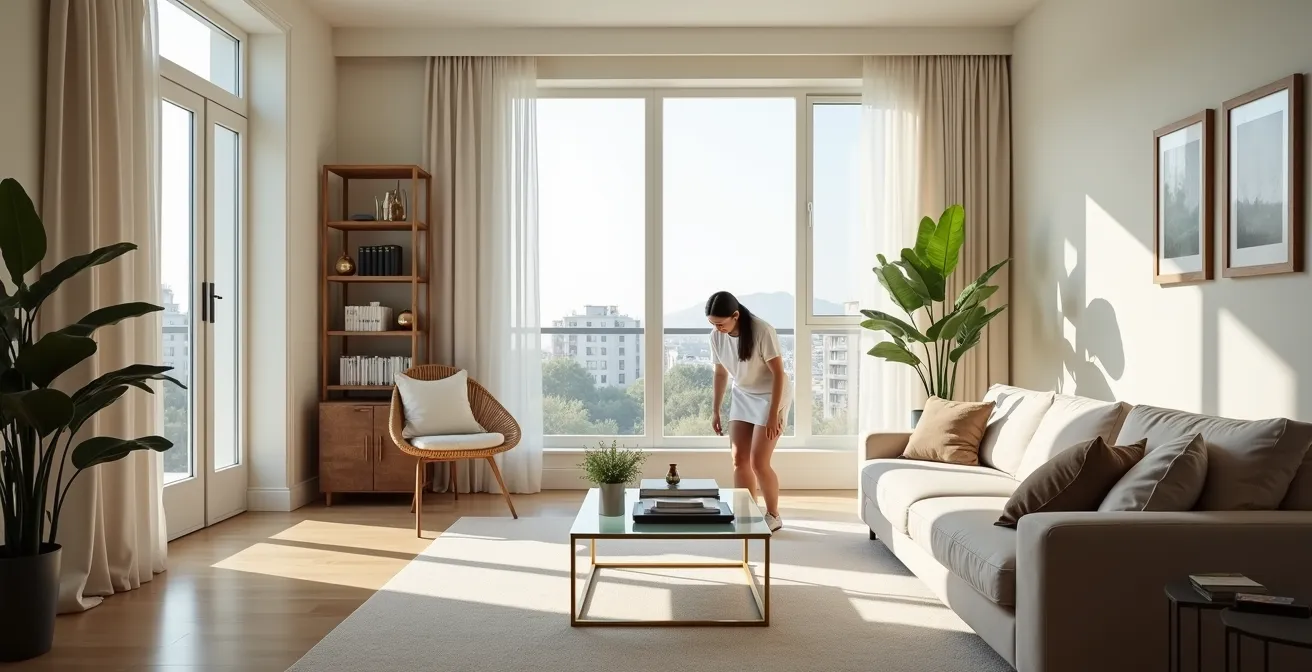
As you can see, light is your greatest asset. The use of light-bouncing materials is not just a design trend; it is a calculated tactic to influence a buyer’s perception of value. A bright, airy room feels larger, cleaner, and more expensive.
This table illustrates the direct impact of your material choices on how a buyer perceives the size and brightness of your living space. A simple swap can dramatically alter the room’s feel.
| Material Choice | Light Reflection | Space Perception Impact |
|---|---|---|
| Glass Coffee Table | High reflection | +20% perceived space |
| Wood Coffee Table | Low reflection | Neutral impact |
| Satin-Finish Paint | Moderate reflection | +15% brightness |
| Matte Paint | Minimal reflection | Absorbs light |
| Metallic Accents | Targeted reflection | Creates depth |
Fixing the Roof vs New Countertops: Which Secure the Sale Faster?
Here is the ultimate test of the “de-risking” philosophy. You have a budget for one major improvement before listing: do you replace the 15-year-old roof or install the gleaming quartz countertops everyone loves on TV? The answer is unequivocally the roof. While new countertops are a “nice-to-have,” an old roof is a major anxiety trigger. It represents a massive, looming, and uncertain expense in a buyer’s mind. It’s a foundational fear.
A buyer can live with functional but dated countertops for a few years. They cannot ignore the fear of leaks, water damage, and a $15,000 replacement bill hanging over their heads. This is about meeting a buyer’s core needs for safety and security before catering to their wants. As a seller, your primary job is to eliminate the big, scary objections first. An inspector will flag an old roof, a lender may hesitate to approve a loan, and a buyer will use it as powerful leverage to demand a steep price reduction. As real estate veteran Ron Phipps notes:
For a buyer, knowing the roof needs to be replaced is a much bigger issue than living with a functional, but dated, bathroom.
– Ron Phipps, HGTV Home Improvement Guide
The financial data backs this up. Cosmetic upgrades, especially major ones, rarely provide a dollar-for-dollar return. They are subject to a buyer’s personal taste. A structural improvement, however, provides peace of mind, which has a universal value. For instance, a basic kitchen remodel with an $80,000 price tag only gets back 49.5% ROI on average. Buyers might not even like the cabinets you chose. But a new roof? That investment removes a massive objection from the negotiation table and tells every potential buyer that this is a well-maintained, secure property. You are not selling a design; you are selling confidence.
The Bold Paint Color Mistake That Alienates 60% of Potential Buyers
The advice to “paint in neutral colors” is one of the most common tips in real estate, but most sellers don’t understand the powerful psychological reason behind it. This isn’t just about appealing to the widest possible taste. A bold or highly specific paint color is another form of risk for a buyer. When they see a bright red accent wall or a deep purple bedroom, they don’t see a design choice; they see work and expense. Their internal monologue immediately starts: “I’ll have to paint over that. That means buying primer, paint, brushes, and spending a whole weekend doing it.”
You have just handed them a tangible, calculable objection. You have forced them to mentally subtract from your asking price. Neutral colors—whites, beiges, and light grays—work because they are a blank canvas. They don’t require any mental energy from the buyer. They allow them to easily and immediately visualize their own furniture, their own art, and their own life in the space. You are removing a barrier to their imagination.
This is about creating a feeling of calm, security, and possibility. A buyer walking into a neutrally painted home feels relief, not responsibility. As one top agent explains, the goal is to evoke positive, foundational emotions:
Neutral, classic colors for the exterior translate into positive feelings for buyers. He advises clients to embrace shades of white, gray and tan for the exterior because they evoke a sense of shelter and warmth, while brown engenders a sense of security.
– Jeremy Lichtenstein, Top real estate agent
Don’t give a buyer a reason to say no before they’ve even considered saying yes. The $500 you spend to repaint a boldly colored room to a soft, neutral tone could be the highest-ROI investment you make. It neutralizes a powerful objection, reduces perceived work for the buyer, and allows the home’s best features—its light, space, and layout—to take center stage. You are not selling your personal style; you are selling their future home.
When is the Best Week of the Year to List Your Family Home?
Just as important as *what* you’re selling is *when* you’re selling it. The real estate market is seasonal, and for sellers of family homes, timing is a strategic weapon. Listing your home at the wrong time can mean sitting on the market for months and facing pressure to reduce your price. Listing at the optimal time creates a sense of urgency and competition among buyers, driving your price up. The key is to think like your target buyer: a family with children.
What is the primary driver for a family’s move? Often, it’s the school calendar. Families want to be settled in their new home before the next school year begins. This means they are actively looking to buy in the spring to close over the summer. This creates a predictable “scarcity window.” By listing in late winter or early spring (think late February to April), you hit the market just as these highly motivated buyers are starting their search, but before the flood of competing inventory arrives in late spring and summer. You create a seller’s market for your specific property.
Don’t wait for your garden to be in full bloom. A motivated family will prioritize getting into the right school district over seeing perfect landscaping. Your goal is to align your listing with their deadline, not your curb appeal’s peak season. This strategic timing puts you in a position of power. Buyers feel the pressure of a ticking clock and are more likely to make a strong, clean offer to secure a home before their options multiply.

The process involves working backward from the buyer’s deadline. Identify local school registration dates (typically May-June) and factor in a 60- to 90-day closing period. This timeline will almost always point to a late-winter or early-spring listing as the most profitable moment. By understanding and exploiting this market dynamic, you are de-risking your sale from market saturation and weak demand.
Why Adding a Second Bathroom Increases Resale Value More Than a Kitchen Reno?
The “kitchen is the heart of the home” cliché has led many sellers to over-invest in massive kitchen renovations with diminishing returns. While an updated kitchen is appealing, it’s a project rife with personal taste. The specific style of cabinets, backsplash, or countertops you spend a fortune on may not appeal to your buyer. A far safer and more profitable investment is addressing a fundamental functional deficit: a lack of bathrooms.
In a home with only one bathroom, daily life can be a logistical nightmare for a couple, let alone a growing family. Adding a second (or even a third) bathroom solves a real, tangible problem. It’s not a matter of aesthetics; it’s a matter of function and livability. This is why real estate experts often advise against renovating your only bathroom and instead focusing on adding another. As 27-year real estate veteran Dick Gaylord states, the priority is clear:
First, don’t spend money remodeling the bathroom if it’s the only one you’ve got. Your money is better spent adding a second bath.
– Dick Gaylord, 27-year real estate veteran
The financial data on renovation ROI confirms this strategic priority. While a major kitchen renovation can be a money pit, bathroom additions and remodels hold their value far better because they solve a universal need. According to Remodeling’s 2024 Cost vs. Value Report, the returns on kitchen remodels are highly variable. While minor kitchen remodels yield a strong 96% ROI, major remodels can drop to only 50%. You risk spending $80,000 on a dream kitchen that a buyer mentally budgets to tear out, recouping only $40,000. Adding a second bathroom, however, broadens your home’s appeal to a much larger pool of buyers and can be a deciding factor that secures a sale at your asking price.
Discounting vs Value-Add: Which Save Tactic Protects Your Brand Equity?
When your home has been on the market for a few weeks without a satisfactory offer, the temptation to drop the price is immense. This is almost always a mistake. A price reduction is a public signal of desperation. It tells every buyer and agent in the market that you are losing confidence and that there might be something wrong with the property. It invites lowball offers and erodes your negotiating power. You are damaging your home’s “brand equity.” A far more powerful strategy is to maintain your price integrity and use value-add concessions instead.
A value-add is a strategic offering that resolves a specific buyer concern without devaluing the asset itself. Instead of dropping your price by $10,000, offer a $10,000 credit at closing for new flooring. The financial outcome for the buyer is similar, but the psychological impact is completely different. A price drop says “my house isn’t worth what I was asking.” A credit says “my house is worth every penny, and I’m empowering you to customize it to your taste.” You maintain the list price, which is critical for the property’s appraisal value, while giving the buyer a tangible win.
This same logic applies to other tactics. Offering to pay for a one-year home warranty adds security and reduces the buyer’s perception of risk. Offering a specific repair credit based on an inspection report resolves a concrete objection head-on. These tactics show you are a reasonable, confident seller, not a desperate one.
This table breaks down the psychological and financial consequences of each strategy. Protecting your asking price is paramount, and value-add tactics are your best defense.
As this comparative analysis demonstrates, the way you concede value during negotiations has a direct impact on your final sale price and the buyer’s perception of your home.
| Strategy | Impact on Perceived Value | Buyer Psychology | Final Sale Price Effect |
|---|---|---|---|
| Price Drop | Signals desperation/flaws | Triggers lowball offers | -5% to -10% from original list |
| Value-Add Credit | Maintains price integrity | Empowers buyer choice | Protects appraisal value |
| Home Warranty Offer | Adds security | Reduces risk perception | Neutral to positive |
| Repair Credit | Strategic concession | Resolves specific objection | Maintains list price basis |
Key takeaways
- Buyer psychology is your primary focus; every action should be designed to reduce their anxiety and perceived risk.
- Invest in foundational security (roof, foundation, functional systems) before cosmetic wants (trendy finishes, high-end appliances).
- Protect your asking price at all costs. Use strategic value-add credits and concessions instead of price drops to maintain your home’s perceived value.
How to Identify Structural Cracks That Cost $10,000+ to Fix During a Walkthrough?
Nothing kills a deal faster than the words “foundation issues.” As a seller, your final and most important act of de-risking is to learn to see your home through the eyes of a home inspector. Of all the potential red flags, structural cracks are the most terrifying to buyers because they represent an unknown and potentially astronomical cost. Being able to distinguish a harmless settlement crack from a five-figure structural problem *before* you list is the ultimate strategic advantage.
Not all cracks are created equal. Small, vertical hairline cracks in drywall or concrete are often the result of normal, harmless house settling. They are a cosmetic fix. The anxiety triggers are cracks that are horizontal, wide (larger than 1/4 inch), or in a “stair-step” pattern running through brick or blockwork. These are tell-tale signs of foundation movement, hydrostatic pressure, or other serious structural stress. These are the cracks that will be highlighted in bold on an inspection report and lead to buyers walking away or demanding massive concessions.

By proactively identifying these issues, you seize control of the narrative. You can consult a structural engineer to get a definitive assessment and a quote for repairs. This gives you three powerful options: 1) Fix the issue beforehand and present a clean bill of health to buyers. 2) Disclose the issue upfront with the engineer’s report and a firm repair quote, removing uncertainty. 3) Price the home accordingly with full transparency. All three are vastly superior to being ambushed by the issue a week before closing.
This matrix is your field guide to identifying high-risk cracks. Knowing the difference empowers you to address problems on your own terms, not a buyer’s.
| Crack Type | Appearance | Severity | Estimated Repair Cost |
|---|---|---|---|
| Settlement Crack | Vertical, thin (<1/8 inch) | Low – Normal settling | $500-$1,500 |
| Structural Crack | Horizontal, wide (>1/4 inch) | High – Foundation issue | $10,000-$15,000+ |
| Stair-Step Crack | Diagonal in brickwork | High – Foundation movement | $8,000-$20,000 |
| Crack wider at one end | V-shaped opening | High – Active movement | $10,000-$25,000 |
Ultimately, selling your home for top dollar is not about luck or having the most stylish decor. It is the result of a disciplined, strategic process of identifying and neutralizing every potential objection a buyer might have. By shifting your mindset from cosmetic appeal to risk management, you take control of the transaction, protect your home’s value, and pave the way for a smooth, profitable closing. For a personalized assessment of your property’s specific risks and opportunities, the next logical step is to consult with a professional who understands this strategic approach.